
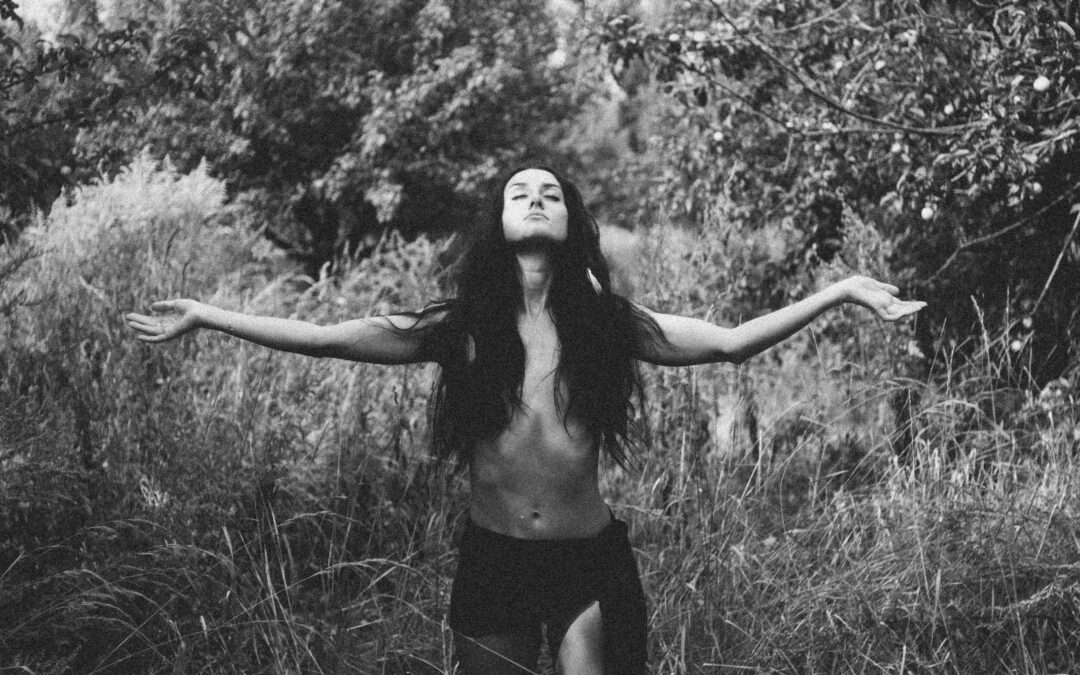
Transformation is always connected to death, something that may scare us but also catches our attention. It’s not only about the physical death of our body; it’s about the death of who we were told to be, the projections that society pushed us into. Transformation is breaking out of a cage and returning to the wilderness.
We are all going through changes, and nature shows us the way: planting a seed, growth, death, and new birth. The cycle of life is hidden in the language of nature. You can see it in spirals, in reflections, and in the tales passed from generation to generation. One of these tales that shows the beauty of transformation is the story of Vasalisa the Beautiful, also known as Vasalisa the Wise.
The Call Into the Forest
Let us go back to the beginning, to the moment when the seed was planted. Before Vasalisa’s mother passed away, she gave her daughter a small puppet with magical powers. Later, Vasalisa’s father married again, and a stepmother as well as stepsisters entered her life. They did not like Vasalisa and wanted to get rid of her. So they sent her into the forest to fetch fire. They knew she would meet Baba Yaga, the wild, fearsome witch, and that she would probably not survive.
But Vasalisa was not alone. Her puppet helped her with all the impossible tasks that Baba Yaga demanded. In the end, Baba Yaga let her go and even gifted her a skull filled with light so that she could find her way home through the darkness.
The Symbolism of Light and Darkness
Vasalisa’s journey is not only connected to the symbolism of light; it’s an invitation for us to trust the transformational processes. When we’re born, we are covered in brightness, but certain experiences, trauma, and even ancestral wounds can turn off the light. Also, Vasalisa fell into this darkness, cut off from her intuition and without self-trust. In a place of vulnerability, the figures of her stepmother and sisters triggered an old trauma of women’s competition, often called the Maria-split, to deceive her. Yet by going into the forest as a place of forgotten wisdom, facing trials, and trusting her puppet, she learns to find the light again – and so can we.
The Puppet as the Essence of the Mother
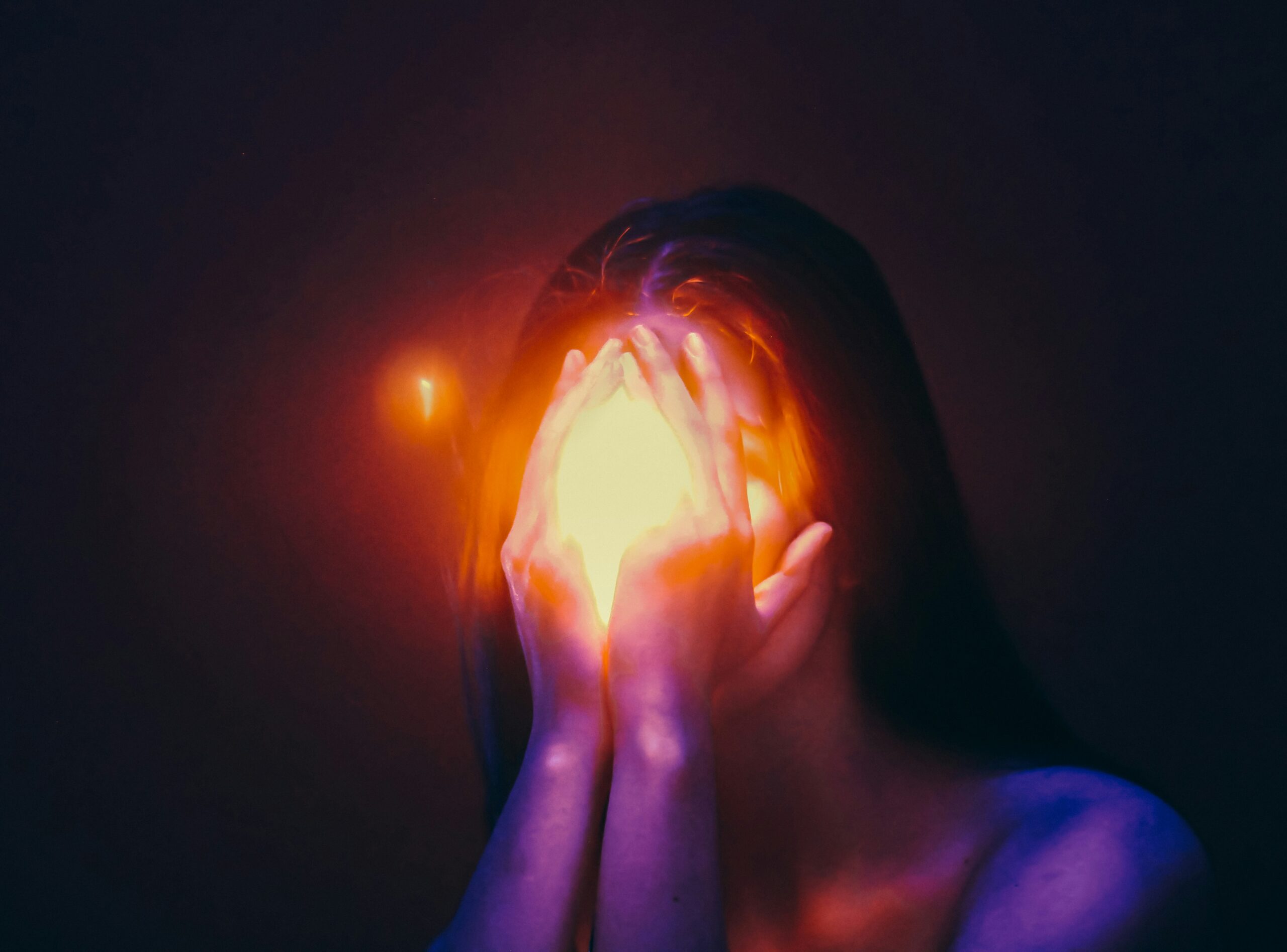
The puppet that Vasalisa has with her, carries the essence of the mother, a vessel for the divine, holding wisdom and guidance. With its help and the soft voice of intuition, Vasalisa is able to complete the tasks of Baba Yaga, heal ancestral wounds, and reconnect with the feminine power that was always inside her.
The story also symbolizes the transition from girl to woman, the moment when Vasalisa needs to step into her confidence and learn to trust herself, while the puppet continues to support her. The puppet can be seen as a symbol of childhood, but also of the loss that comes with growth and transformation. It invites Vasalisa to take responsibility and care for herself, to step into the role of the mother. At the same time, it holds talisman-like qualities, offering protection and comfort. The puppet functions as a bridge between Vasalisa and her deceased mother. Through this connection, Vasalisa receives not only warmth and security but also real guidance in mastering her tasks. The mother’s essence, her wisdom and knowledge, lives on in the puppet.
The Archetypes Within Us
This reminds us as well that we are vessels of the divine but also embody several archetypes that are all part of our journey. We need to reconnect with the archetype of the mother while keeping the youthful and enthusiastic energy of the maiden, gifting ourselves and others with love while being independent. Reclaiming our confidence and leadership, as the archetype of the queen shows us, as well as unlocking our wisdom, represented by the figure of the wise woman, while celebrating the freedom of the mystic. We’re constantly facing the different parts of ourselves and getting challenged on our journey through them.
The Stepmother as Catalyst
Although the stepmother appears as the “evil” figure of the story, she is ultimately just another piece on the board of the game of life, a catalyst who helps Vasalisa grow beyond herself. Her death, caused by the magic of Baba Yaga at the end of the tale, represents the dissolving of an old trauma, the healing of the women’s wound.
———— read on below the ad ————

Start Your Healing Journey With Our FREE Guide: Unshame Yourself.
Get FREE access to the e-book that’s helping people all over the world unlearn toxic conditioning, heal the wound of unworthiness, and reclaim their truth – unapologetically.
Healing the Women’s Wound
The women’s wound is a broad, often collective psychological and cultural concept. It refers to deep-seated emotional and relational hurts that women inherit, internalize, or carry because of gendered expectations, trauma, oppression, relational dynamics, and the loss of certain freedoms. Still, we are often suffering under the feeling of not being good enough, being too much, and simply not fitting in. The truth is that we embody a variety of traits that are sometimes blocked by the separation of one of the archetypes.
The Witch Wound and the Fear of the Feminine
This brings us to another important point: the witch wound. The witch wound can be seen as a more specific dimension of the women’s wound, as it is deeply connected to the history of the witch hunts. Because of this history, many women may feel unsafe showing their power, intuition, or wisdom, and in keeping spiritual practices alive. Anyhow, the witch wound is still present and carried by many of us.
The witch wound is projected onto Baba Yaga as a stereotype of the demonized feminine that patriarchal culture taught us to fear and avoid. In Slavic mythology and folklore, Baba Yaga is often described as a witch with partly animal features. She has chicken legs and lives deep in the forest, both clear characteristics of the wild woman archetype. Her long hair, long nose, and hanging breasts reinforce this image. Like most witches, she possesses magical powers, which can be seen in her means of travel and in her extraordinary house that stands on chicken legs.
———— read on below the ad ————

🌿 Join Our Free Community, Away From Social Media
Inside our free community you’ll find connection, motivation, and daily inspiration to feel empowered and come home to who you truly are. Whether you’re just starting out or already deep in the work, this is your space to be reminded that you’re not alone.
Truly Free. Without Ads.
It’s truly free. By signing up you agree to our terms & conditions & privacy policy.

🧠 Start Healing With Your Psychologist In Your Pocket
Unlock access to our online library with all our offerings at once: our online community, all our trauma-informed tools, healing toolkits, and the powerful “Ask a Therapist” Q&A. Over €1000 worth of healing resources, designed to help you heal, break free & transform yourself and your life!
For Just €9,99/Month.
The Power of the Snake and the Wild Woman
Yaga is connected to the Russian words uzkii (“snake-like”) and uzh (“grass-snake”), which again show her anthropomorphic nature but also the power of the feminine, since snakes are often seen as symbols of feminine energy. The snake also represents transformation and teaches us to shed our old skin to enter a new cycle.
Because Baba Yaga lives in seclusion, her home can be interpreted as the border to another world. Entering her realm means accepting transformation, for no one returns unchanged. The name Baba refers to an old woman, which shows that Baba Yaga is not only a fearsome being but also a symbol of wisdom and potential growth. By staying with her and fulfilling her tasks, one earns insight and strength. Thus, her seemingly evil nature becomes a reflection of our own fear of inner power and ancestral wisdom. Here we can see the potential for healing by reclaiming our own power, reconnecting to our intuition, and honoring our spiritual gifts and wisdom.
Nature’s Rhythm and the Three Horses
The wisdom that Baba Yaga keeps is linked to nature, which can also be seen in the three horses that appear in the tale, symbols of the rhythm and cycle of transformation:
• The white horse stands for bright day, clarity, and consciousness.
• The red horse represents the setting sun, the fire of transformation.
• The black horse marks the night, the darkness of the unknown where inner growth happens.
It can therefore be said that the play with light metaphors is also reflected on this level.
The Skull of Light and Rebirth
The skull, too, carries a deep symbolic meaning. At first glance, it seems to represent death, and indeed, Vasalisa’s stepmother and stepsisters die upon her return home, guided by the skull. Yet it is not the skull itself that kills them. The skull symbolizes rebirth, especially with the light glowing inside it.
From Vasalisa’s weakest point, when she had lost trust in herself and her inner power, overwhelmed by grief over her mother’s death, Baba Yaga, the Great Mother, gave her a light that guided her back out of the labyrinth of uncertainty and into her strength and self-trust.
———— read on below the ad ————
Ready For Your Own Transformation? Shop Our Tools!
-

Releasing Suppressed Emotions: Guided Somatic Exercise (Audio)
€ 14,99 -

Finding Purpose: Guided Inner Child Visualization (Audio)
€ 14,99 -

Feeling & Healing Suppressed Emotions: Guided Somatic Exercise (Audio)
€ 14,99 -

Overcoming Fear of Speaking Up and Setting Boundaries Guided Somatic Exercise (Audio)
€ 14,99 -

Healing the Mother Wound: Guided Meditation (Audio)
€ 8,99
The Eternal Cycle of Death and Rebirth
To summarize, we can see that this fairy tale covers many different symbols with similar meanings. Together, they mirror the eternal rhythm of death and rebirth, guiding Vasalisa, and all of us, through the journey of transformation and awakening. In the end, transformation begins when we stop trying to avoid the dark and instead bring light into it. It’s about integrating the unique expressions of the archetypes that are accessible to all of us.
Vasalisa is a mirror for women and empowers us to take a step into the darkness and to seek the light within it while facing shadows as well as the deeper wisdom that each archetype carries and teaches us.
Go Deeper
Ready for a next step? Explore our paid tools & programs.


Related Blogs

Healing Through Storytelling: A Powerful Way to Reclaim Your Voice
Most of us move through life with a collection of moments, memories and impressions that live inside us without ever being spoken. We know what happened, yet we rarely take the time to explore what these experiences meant, how they shaped us, or how they live in our...

The Fairy Tale of Star Money: Reconnecting With The Inner Child
“And as she stood there, having not a single thing left, suddenly some stars fell down from heaven, and they were nothing else but hard, smooth pieces of money.” The fairy tale The Star Money tells the story of a poor nameless girl who owns nothing except the clothes...

Intergenerational Trauma: How Inherited Pain Shapes Your Life
If there is one thing I have seen over and over again in my work with clients from all over the world, it is this. We all carry the same invisible wound. A deep sense of unworthiness, a quiet shame about who we truly are, and a constant fear that if our authentic self...

Beautifully written and woven together. The tension between light and darkness…the hidden corridors of transformation…this is almost like a mythic and psychological initiation, and arguably a guide for anyone walking through their own dark nights, with the ensuing rebirth and awakening once it is embraced. Very powerful. Thank you!