

Lately, I’ve been reading The Tragedy of Heterosexuality by Jane Ward, and although I haven’t finished it yet, I’m hooked on the theme. It’s all about breaking free from the cultural chokehold of gender roles, norms, and the white-supremacist, heterosexual, monogamous relationship as the “holy grail” of adulthood.
What struck me most – yet again – is how violently women were historically forced into marriages, told to center men, produce children, and deliver endless emotional labor. And when the marriage inevitably “wasn’t working”? It was never the man, never the institution. It was her. She was told to work on herself, to smile more, to please harder, to swallow her own needs and find a way to become more “pleasing.”
Sound familiar?
Because here we are, decades later, and the script is still running. The cultural training is so deep in our bones that most of us don’t even notice it anymore. We’ve been conditioned to center men, to perform in a way that makes heterosexuality look like it works, even when it drains us. We’ve been conditioned to use our sexuality like a bargaining chip, a manipulative tactic for safety, attention, or survival. Why? Because patriarchy has always been the gatekeeper of resources: money, property, protection, status, freedom.
And when survival depends on patriarchy, what do you do? You perform.

Patriarchal Womanhood Is Everywhere
I still see it every day. Women in heterosexual relationships losing their sparkle. Women becoming mothers and watching their bright spirit, their lust for life, slowly fade under the weight of expectation. Young men walking around entitled to women’s bodies, their emotional labor, their validation. Violence against women dressed up as “tradition” or “protection.”
And this isn’t just “out there” in Iran with the hijab police or in Afghanistan where women are forbidden to speak, sing, or even make eye contact with men. Or in Bali, where women still aren’t allowed to walk alone at night. It’s also way closer to home, as it wasn’t so long ago that the West looked almost identical. The only difference now is that the oppression is more covert. It’s hidden in our conditioning, our beauty standards, our gender roles, our Instagram feeds.
That’s why so many women I work with are terrified to let go of the old, oppressive expectations. They can’t even see the cage, but they still feel it.
The Joke of Patriarchal Womanhood
So let me say it again: patriarchal womanhood is a joke. The version of womanhood I learned to conform to? Fake. A performance. A role designed to keep me small. And once you see it, you can’t unsee it.
You see it in the thousands of euros spent on fake faces and fake boobs. You see it in the obsession with staying young, thin, hairless, spotless. You see it in the fear of wrinkles, the shame of aging, the endless beauty rituals that serve no one but the system. Patriarchy doesn’t want women who age into wise leaders. It wants women who stay trapped in girlhood. Women who are so busy fixing their hair, their skin, their body, their smile, that they don’t have time to revolt.
The standards are clear: as long as you can perform the role of “thin, young, pure, flawless little girl,” you’re rewarded. You’re deemed worthy. You get access. But the cost? You silence yourself. You trade your voice, your boundaries, your truth, for acceptance. You swallow your rage and learn that being “a good girl” makes you marriage material. You interrupt your own ripening, halting the natural process of becoming the mother, queen, or crone you were meant to be.
This performance is not harmless. It kills authenticity. It halts emotional maturity. It stops women from stepping into their natural leadership.
And yet, we clap for it. We’ve been trained to see women who shrink as virtuous. We’ve been trained to see women who smile and nod as “feminine.” We’ve been trained to see women as less intelligent, less powerful, less strong, and “too emotional”, as if emotion is weakness, when in truth it’s the deepest source of power we have.
This is the joke. And it’s not funny.
The Patriarchal Relationship Script
Patriarchy’s favorite trick is making the heterosexual, monogamous relationship look “natural.” The truth? It’s scripted. It’s staged. It’s theatre.
Young men are trained to perform masculinity: stoic, detached, provider, protector. Women, the moment they become “girlfriends,” slide into their complementary role: shrinking, smiling, pleasing, serving, nodding, submitting. Two actors stepping onto a stage with lines written centuries ago.
And then we dare to call it “love.”
But what it really is, is performance. Two people trying to live up to roles they didn’t choose. He pretends to be in control, she pretends not to be. And both quietly suffer under the weight of inauthenticity.
It’s a recipe for disconnection, resentment, and silent suffering. It’s also the perfect breeding ground for co-dependency. In psychology we give it sterile names like “power imbalance” or “manipulative patterns,” but in plain language? It’s patriarchy teaching women to contort themselves to be worthy of scraps, and teaching men to confuse domination with intimacy.
When Love Becomes Transaction
Because here’s the catch: when men are taught they are “the providers” and “the protectors,” they are also taught they are entitled to women’s emotional labor, women’s bodies, women’s sexuality. Women, in turn, are trained to be grateful for protection — and to give themselves in return.
That’s not intimacy. That’s transaction.
And because women aren’t raised to claim their boundaries or needs directly, survival often takes the shape of indirect tactics. We learn to weaponize helplessness, or to use beauty as leverage. Not because we’re manipulative by nature, but because we were raised to believe it was our only chance of survival.
This is what patriarchy does best: it creates the wound, then shames you for the way you learn to survive it.
And so we find ourselves in relationships where women play small to be safe, where men confuse dominance with masculinity, and where both are robbed of true connection.
———— read on below the ad ————
free guided somatic session
Your Yes & Your No
The 17-minute practice to stop abandoning yourself.
The very first step back to yourself. A free guided somatic session to come back to your body, your intuition, and the difference between a true yes and a conditioned one.
17 min ・ free audio
Sacred Rage and the End of the “Good Girl”
Let’s get one thing straight: women have not been raised to be powerful. We’ve been raised to be pleasing. Dependent. Soft. Humble. Polite. We were taught that safety lives in smallness, that if we are agreeable enough, selfless enough, pretty enough, the world will protect us.
Except it never does.
Instead, it teaches us to survive by manipulating our own helplessness. To use beauty as a weapon, submission as strategy. To get what we need not by standing tall, but by bending in the right direction.
But here’s the truth: we were never born manipulative. We were made that way, conditioned by a system that rewards compliance and punishes authenticity.
And this, my loves, is where the real shadow work begins.
The Shadow Work No One Wants to Do
I’m not talking about the soft-core, Instagram-filtered version of healing. Not the bypassing, the “raise your vibration,” or the positive affirmations pasted over deep wounds. I’m talking about the real, honest, gut-wrenching work. The work that asks you to meet your shame, your fear, your grief, and your rage.
Because the truth is, we cannot create change while we’re still living from our shame-based identity. We cannot heal while staying addicted to the very coping mechanisms that once kept us safe. We cannot rise while still using manipulation, silence, or self-abandonment as currency for love and belonging.
That’s not healing. That’s maintenance of oppression.
Real healing, true liberation, is emotional maturity. It is facing your suppressed emotions head-on. It is taking radical responsibility for your projections, your defenses, your stories. It is reclaiming and owning every part of yourself you have disowned out of shame.
It is standing in your sacred rage, not to destroy, but to transform.
The Power of Sacred Rage
Sacred rage is not chaos. It is clarity. It is the clean fire that burns away pretense and performance. It is the power that says: no more pretending, no more pleasing, no more shrinking.
It is the mother energy that protects. The queen energy that leads. The crone energy that sees through illusion.
And this is the energy the patriarchy fears most.
Because a woman connected to her sacred rage cannot be controlled. She cannot be silenced. She cannot be gaslit into doubting her truth. She is emotionally mature, self-resourced, sovereign, and therefore profoundly unprofitable to a system built on her insecurity.
This is the kind of womanhood we must return to. Not the performative, polished, patriarchal version, but the raw, wise, unapologetically human kind. The kind that redefines power as presence and beauty as truth.
———— read on below the ad ————
Break Free From Good Girl Conditioning: Shop Trauma-informed Healing Tools
-

Stay – A Guided Somatic Session for the Fear of Disappointing Others
€ 27,00 -

Imperfect – A Guided Parts Work Session for Overcoming Perfectionism
€ 27,00 -

Worthy – A Guided Somatic Session for the Wound of Unworthiness
€ 27,00 -

Reparented – A Guided Somatic Session for Inner Child Reparenting
€ 27,00 -
Sale!

Unshame Yourself: Book + Workbook
Original price was: € 28,00.€ 22,99Current price is: € 22,99. -
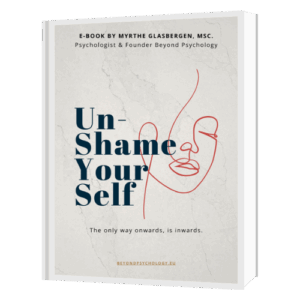
The Unshame Yourself E-book: A Book on Healing Shame and Unworthiness
€ 17,99 -

No – A Guided Somatic Session to Stop People Pleasing
€ 27,00 -

Move – Overcoming Procrastination: Guided Parts Work Session
€ 27,00
The Girls Who Learned to Perform
If we want to create real change, we have to start by looking at what we teach our girls. Because girls are not born ashamed. They are not born insecure or hungry for validation. They are born wild, curious, alive, radiant with life force. And then, slowly, that life force gets tamed.
We teach them to smile, to be nice, to sit properly, to cover up, to not be too loud, too emotional, too demanding, too sexual. We teach them that their worth lies in how others perceive them, that they must be careful not to be “too much,” and that the most important thing is to be liked.
But at the very same time, society turns around and sexualizes them. Before they even know what their bodies mean to them, they learn what their bodies mean to others. Their value is mirrored back through filters, likes, gazes, and comments. The message is clear: you are to be desired, not to desire. You are to be looked at, not to look back.
And then we wonder why so many women grow up feeling unsafe in their own skin, disconnected from their power, ashamed of their desires, and afraid to take up space. This is not just personal. It is systemic. It is an entire culture that trains girls to confuse submission with love, and attention with worth.
The Betrayal Begins in Childhood
We betray our girls when we teach them that silence is safety. When we praise them for being “sweet” instead of being strong. When we celebrate their compliance instead of their curiosity. We betray them when we make their beauty more important than their boundaries. When we teach them to trade authenticity for belonging. When we let the world convince them that shrinking is feminine, and that power is masculine. And then we act surprised when grown women struggle to say no, to feel anger, to claim pleasure, to trust their intuition.
Raising Girls Who Remember Their Power
We have to stop raising our girls to be dependent, humble, unprotected beings who survive by using their sensuality or helplessness to get what they need. We have to stop mocking their anger, taming their boundaries, or punishing their self-expression. Because every time we do, we reinforce the same system that silenced us.
A girl’s anger is not dangerous. It is sacred. Her boundaries are not rejection. They are self-respect. Her voice is not disrespectful. It is truth.
When we teach girls to honor these things instead of suppressing them, we raise women who can protect themselves, express themselves, and lead themselves. We raise women who no longer perform to survive.
———— read on below the ad ————
free guided somatic session
Your Yes & Your No
The 17-minute practice to stop abandoning yourself.
The very first step back to yourself. A free guided somatic session to come back to your body, your intuition, and the difference between a true yes and a conditioned one.
17 min ・ free audio
The Call to Women
We can no longer wait for the world to change while we keep performing the very roles that uphold it.
We cannot fight patriarchy with our pain still buried, our truth still silenced, and our worth still outsourced.
Healing is not about becoming softer so the world can digest us. It is about becoming so whole that the world can no longer manipulate us.
Radical responsibility means looking straight at the parts of ourselves that have adapted to survive. The parts that flirt, please, stay silent, over-give, or manipulate love through compliance. It means asking: where am I still performing? Where am I still seeking permission to exist? Where am I betraying my truth in exchange for safety?
This is not about shame. It is about reclamation. About seeing how every strategy once kept us alive and now keeps us small. About meeting these parts with compassion and inviting them back into integrity.
When women begin to live from that place of wholeness, something extraordinary happens. We stop waiting for validation. We stop chasing approval. We stop apologizing for our existence.
We begin to lead.
The End of the Performance
When a woman stops performing, the entire system trembles. Because her authenticity disrupts everything that depends on her obedience.
The performance collapses when a woman finally looks at her reflection and says, I am not here to be pleasing, I am here to be real.
And in that moment, everything she was taught to fear becomes her power. Her emotions become intelligence. Her anger becomes discernment. Her voice becomes truth.
This is the beginning of collective liberation. Not through rebellion that mirrors the same aggression, but through embodied truth that can no longer be negotiated.
We do not heal the world by being liked. We heal it by being awake.
So let the joke end here.
Let patriarchal womanhood die with our refusal to perform it.
Let us be the women who remember that liberation is not given, it is lived.
Because once a woman stops pretending, she is free.
And once women are free, the world will never be the same again.
Go Deeper
Ready for a next step? Explore our paid tools & programs.
Related Blogs

The Truth About The Male Loneliness Epidemic: Why Men Feel Lonely (It’s Not What You Think)
Are Men Okay? This past week I caught myself asking the question out loud more than once. Are men okay? I mean that seriously, not rhetorically. Toxic male behavior keeps surfacing in the news, in workplaces, in the darkest corners of the internet where men gather to...

What Healing After a Traumatic Birth Actually Looks Like: An Ecological Exploration of Belonging and Return
Birth is an initiatory threshold. One that can leave a woman shattered and empowered in the same breath, sometimes in the same moment. Few women will have little to say about it. Fewer still will move through it unchanged. It is the place where the most vulnerable...

The Fawn Response: The Survival Strategy Hidden Under Niceness
Most women who find this article are not looking for a diagnosis. They are looking for a word. They have spent years being the one who smooths things over, who agrees even when they don't, who reads the room before they read their own feelings. They are exhausted in a...
