
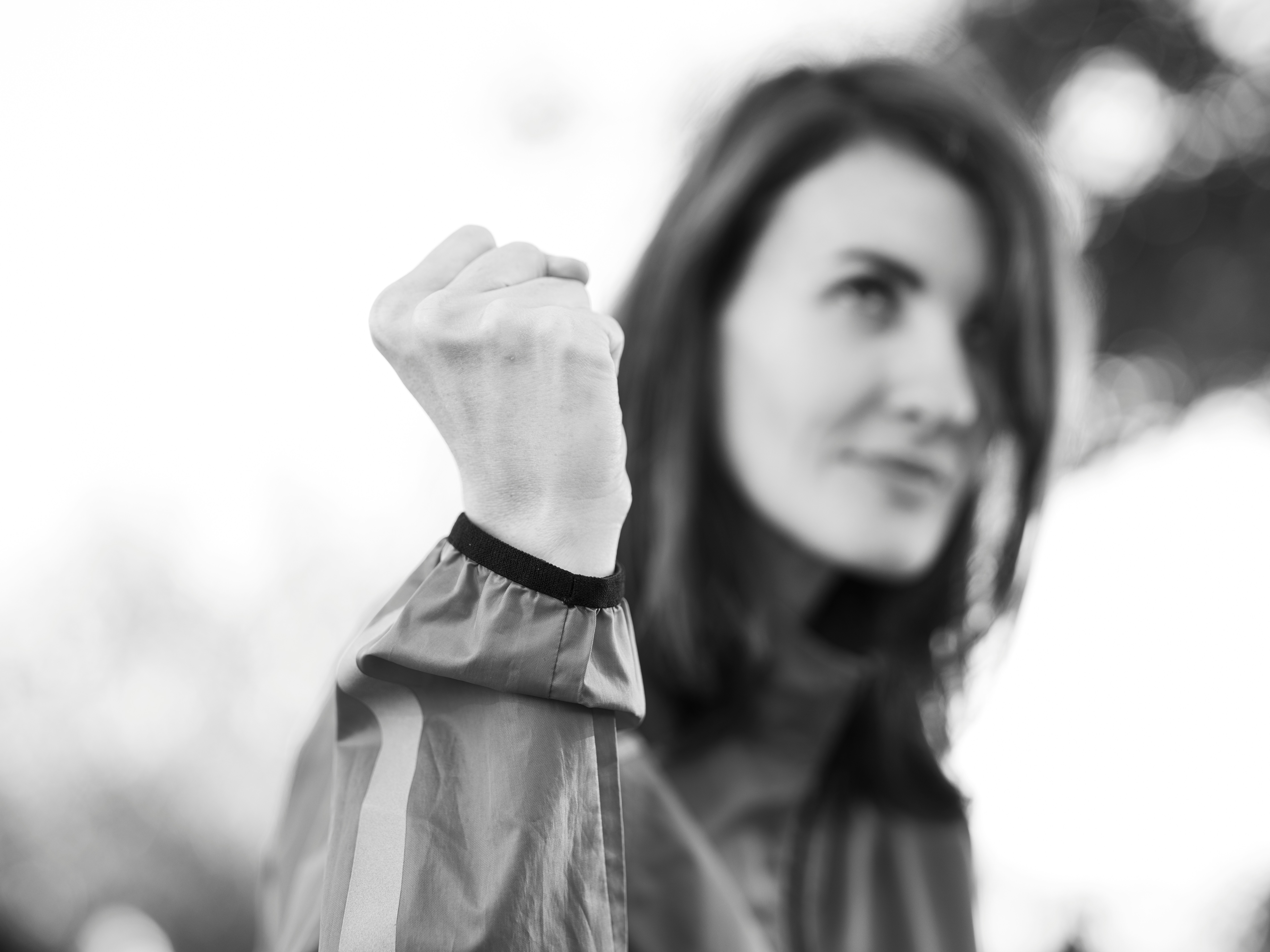
Lately I’ve been wondering: why do some women, often highly educated, privileged, and seemingly free, choose to support right-wing, conservative, populist parties? Women who have all the access, opportunity, and security that others still fight for. Women who know these parties are authoritarian, built on exclusion and fear?
Is it because adjacency to power has become more important to people, or in this case to women, than freedom itself? Is it a trauma-bond with patriarchy? Or is it something entirely different, and if we investigate further, might we even surprise ourselves?
At first, I asked these questions with judgment, or rather with deep disappointment in my fellow female comrades. Mainly because their choice stands so far from mine. But when the frustration softened into sadness and grief, slowly there was also space for genuine curiosity.
In this article I try to make sense of these questions. And yes, also of the frustration, the sadness, the grief, the anger, the hopelessness, and sometimes even the existential dread: what is true if not the truth of choosing empathy, compassion, peace, and an open heart? What is true if not the desire to end oppression, so we can all live in peace, prosperity, freedom, creativity, and authenticity? What is true if not the belief that my freedom is incomplete unless it includes yours?
While writing, I have tried to stay cautious with my conclusions, to integrate some shadow work, to ask where my own pain, grief, rage, and trauma are at play. Where do I recognize parts of myself in these women? Where are we the same? Where do we differ? And why?
Prefer to listen to this article instead of reading it? Just watch the video below. Scroll down if you prefer to read on.
A World Built By Men, For Men
Before I begin, I want to clarify where I’m coming from. I write from the understanding that we live in a patriarchal, capitalist, and increasingly individualistic world, a system that has for centuries disconnected us from our nature, our bodies, our emotions, and from each other. A world largely built by men, for men, men who lived centuries ago, shaped by their own fears, wounds, and survival needs.
In the past, I could feel deep grief about this, sometimes even anger. Grief for what has been lost, for what could have been if the world had been built differently. But now there is more acceptance, not agreement, but a clear-eyed acknowledgment of the reality we live in. Still, it remains a fact that men in power have historically excluded women from positions of influence and decision-making.
Within such a framework, I find it both fascinating and painful to see women aligning with right-wing ideology, movements that often reinforce the very hierarchies that have long limited their freedom. It raises questions for me. What makes these ideologies appealing? What emotional or psychological needs do they fulfill? Is it identification with power, fear of losing safety, or something deeper, woven into our collective conditioning?
I don’t claim to have the answers. This essay is not an accusation, but an exploration, an attempt to understand what drives these choices on an emotional and systemic level, and what they might reveal about all of us.
So, let’s begin where I believe it all starts.
1. The Rejection of The Feminine
At the root of it all lies what I believe to be a collective rejection of the feminine. Right-wing movements glorify control, hierarchy, dominance, and self-reliance, the very traits that have been weaponized to suppress the feminine principle: the emotional, the intuitive, the relational, the cyclical, the chaotic, the caring. Although I must admit that as a queer person myself, it is still complicated to speak of these traits as feminine versus masculine (it is not that black and white). Still, I do believe that there has been a historical erasure and true devaluation of feminine power: precisely because it was feared, or because it needed to be controlled for political, religious, and economic agendas.
When women defend these values, they unconsciously defend the structures that once demanded their obedience. It becomes a subtle form of self-betrayal disguised as empowerment. Because when you protect a system that thrives on inequality, competition, and exclusion, you are not protecting yourself, you are preserving the conditions of your own containment.
I know this because I’ve felt it too. The temptation to belong, to be accepted by the very structures that once rejected me. The longing to be seen as competent, respected, strong, to prove that I can play their game and win it. There is a strange comfort in compliance, a familiar safety in being tolerated by power. But beneath that comfort lives a quiet grief: the grief of knowing that to be accepted by a system built on domination, you must first abandon parts of yourself. The grief of realizing that no matter how well you adapt, you will never truly belong to a world that was never built with you, nor for you.
The feminine, as an energy, a quality, a way of being in the world, has been suppressed for centuries. It has been shamed, mocked, ridiculed, rejected, and denied. It has been called irrational, too emotional, too soft, too chaotic, too hysterical, too much. These qualities have been collectively devalued, shamed, and suppressed in favor of control, order, logic, dominance, and self-reliance. And so, we’ve learned to fear what is fluid, to mistrust what feels, to idealize what conquers and contains. In my e-book ‘Unshame Yourself’ I call this phenomenon the collective mother wound.
From a young age, boys are taught to suppress the feminine within themselves — to reject their own sensitivity, intuition, and emotional vulnerability. They are conditioned to feel shame for the soft, the tender, and the dependent parts of their being. And from that shame, the world we live in today was built. A world that values productivity over presence, logic over feeling, control over connection, and strength over sensitivity. A world where dominance is seen as safety, and where power is something you take, not something you share.
Within such a world, women have learned, and often been forced, to adapt. Because to embody the feminine has meant to be powerless, dependent, and unsafe. Historically, our survival depended on men, on their protection, on their approval, on their willingness to provide. Deep down, we still carry the trauma of that dependency, the fear of being powerless in a world ruled by those who could decide our fate.
So somewhere, consciously or unconsciously, we made a collective vow.
I will never be powerless again.
I will stay close to power.
I will learn its language, its logic, its rhythm.
I will play along, even if it means abandoning parts of myself.
Because being close to power feels safer than being crushed by it.
But here lies the painful paradox.
Women are not only conditioned to suppress the feminine; they are also shamed and devalued for it. The very qualities that live naturally inside them are dismissed as weaknesses by the world around them. And so begins the inner battle, the lifelong performance of worthiness. The need to prove that they are not “too emotional,” not “too soft,” not “too naïve.” The need to show that they can play the game, work harder, think sharper, achieve more, and succeed in a world that was never designed to hold them. It’s a survival mechanism: as long as I stay independent, and close to power – even wielding that power myself, I won’t be dependent, vulnerable, and in a state where I can be taken advantage of.
It becomes an exhausting attempt to be taken seriously in a system that measures value through masculine eyes. And that, I believe, is where the wound deepens. Because in trying to escape the shame (and vulnerability) of being feminine, women often end up rejecting themselves. They fight to be accepted by the system that once made them powerless, and in doing so, they begin to mistake that adaptation for empowerment.
When rejecting the feminine starts to feel like freedom, when control begins to masquerade as safety, and when belonging within patriarchy starts to feel like success, something essential in us is lost. The deepest parts of our humanity are sacrificed for a seat at the table in a world that was never built to hold us – or for us to thrive.
——- read on below the ad ——-
free guided somatic session
Your Yes & Your No
The 17-minute practice to stop abandoning yourself.
The very first step back to yourself. A free guided somatic session to come back to your body, your intuition, and the difference between a true yes and a conditioned one.
17 min ・ free audio
2. The Need for Safety, Belonging, and Control
Right-wing ideology, with its emphasis on structure, control, and traditional values, can appear to offer safety and stability. For someone whose nervous system is wired around fear, distrust, chaos, or disconnection, such structure can feel emotionally regulating, a soothing antidote to uncertainty. It gives the illusion of order, predictability, and belonging in a world that often feels unsafe.
But still, while writing this, I wonder… I grew up in an environment that was chaotic, unpredictable, blaming, and emotionally unsafe, and yet I didn’t grow up to long for strict structure or rigid control. Still, I didn’t choose to vote for conservative, right-wing ideologies.
So, maybe it’s not that simple. Maybe it’s not only about wanting stability or safety.
Maybe we are mistakenly connecting two things that are deeply related but not the same. The first – the desire for stability, control, structure, and power – is a natural human longing when life has felt unpredictable or unsafe. Anybody can have that desire or need, and it’s a very logical reaction to a past that felt too overwhelming and complex.
Intergenerational trauma
And then, layered on top of all of this, is the collective trauma women carry, the intergenerational wound of oppression, control, and domination by the more rigid, masculine structures of the world. Somewhere in our subconscious, we remember that powerlessness, that dependency. And from that memory, we made an agreement: never again.
Never again will I be dependent, or controlled, or small.
Never again will I wait for someone else to give me power.
I will become powerful myself.
And so, in my investigation I would say, maybe some women move closer to the system that once oppressed them, believing that embodying its traits will protect them. They align with hierarchy, control, and dominance, mistaking these for safety. They internalize the values of the father, perhaps even the father himself, the symbolic authority, the one who decides, who provides, who protects. The one who approves, dismisses, rejects, or gives value. The one you feel reliant on for safety, and… a sense of self-worth.
Maybe this is what we are seeing now: not women craving power for its own sake, but women subconsciously trying to reconcile their father wound, trying to prove their worth, trying to stay safe and have some sense of control, and trying to stay close to power because it feels like staying close to father: it gives power, approval, and a sense of independence at the same time.
To obey or not to obey, that’s the question
I can see how this dynamic plays out on a collective level. When women (and people in general of course) have been hurt, dismissed, or made to feel powerless, the instinct to control, to contain, to build walls, to police the boundaries, can feel like protection. Right-wing ideology mirrors that instinct. It offers the illusion that if we can just hold everything in place, define who belongs and who doesn’t, control what enters and what stays out, we will finally be safe.
But that safety is conditional. It depends on obedience, on staying inside the lines, on never questioning the system that offers it. And that is why I see this attachment as a form of trauma-bonding with patriarchy. The system that once hurt you becomes the one you now defend, because you have learned to equate it with safety. You stay close to it because stepping away feels like free fall, and perhaps also because you have suppressed the parts of yourself that you need to feel a sense of internal power, ground, and confidence to go out on your own in this world.
Maybe these women aren’t consciously seeking power at all, but protection, from chaos, from rejection, from the unbearable feeling of powerlessness that once lived in their bodies. And if that is true, then perhaps their choice isn’t about ideology at all, but about safety, belonging, and the deep human need to be held by something that feels stronger than themselves.
Trauma-Bonding with Patriarchy
So, what is a trauma bond? And why do I write about a trauma bond with patriarchy? Well, if I look at this dynamic through the lens of trauma, what I see is a bond – a survival bond – between women and the very system that wants to oppress them.
When pain becomes familiar, the body begins to confuse it with safety. We attach ourselves to what we know, even when it hurts us, because what is familiar feels more predictable than what is free. When we experience pain or oppression over a long period of time, we often unconsciously attach ourselves to the source of that pain, because it feels safer to stay connected to what hurts us than to face the unknown without it.
In trauma theory, we know that the nervous system will always choose the familiar over the free, because the familiar feels predictable. And patriarchy, no matter how damaging, is deeply familiar. It has defined our sense of safety, belonging, and value for centuries.
So, we internalize it. We learn its rules, its language, its rewards. We adapt to it so thoroughly that it begins to feel like home, even as it keeps us small. We find meaning in hierarchy, validation in performance, and a fragile sense of safety in the approval of authority. We stay close to the system that harmed us because it promises protection from the very powerlessness it once caused.
It is a psychological double bind that echoes the relationship many of us once had with our parents. The parent who was emotionally unavailable, neglectful, or unpredictable, but whose approval we still desperately longed for. We learned to modify ourselves, to be good, to be quiet, to not need too much in order to be safe. We learned that obedience brought acceptance and that rebellion brought abandonment. And without realizing it, we began to carry those same dynamics into our relationship with society itself.
This is what I mean when I speak of trauma bonding with patriarchy. It is the unconscious loyalty we maintain to the system that once hurt us, because our bodies still remember that survival once depended on obedience.
The attachment echo of our female ancestors
This attachment can run so deep that it begins to live inside the body, not as ideology, but as identity. It is the echo of generations of women who learned that survival depended on being chosen, approved, or protected by authority. It is the unspoken loyalty that whispers, if I understand the rules, I will be safe.
This is how collective trauma quietly perpetuates itself. The oppressed begin to embody the oppressor’s traits. The hurt transforms into hardness, the fear into control, the dependency into dominance. Not because we agree with these systems, but because our bodies have learned that power, even borrowed power, feels safer than powerlessness.
Because trauma, when unhealed, does not disappear. It just changes shape. As a result, the bond remains. It hides under competence, under strength, under the belief that we are free because we have mastered the rules. But the deeper truth is that what feels like mastery is often survival in disguise. What looks like empowerment is still an echo of fear, the fear of being powerless again.
And still, while I am investigating my questions around this topic. I realized something profound. Reading back my words so far, I recognize myself in all of this. Still, I didn’t vote for right-wing conservative parties. And if I recognize this inside of me, on an individual level, and seeing how I have been centering men in my life too, for all of the above reasons. Why would I still vote left-wing, or more social, and progressive, and another woman the complete opposite?
——- read on below the ad ——-
Return to yourself: Shop Trauma-informed Healing Tools
-
Stay – A Guided Somatic Session for the Fear of Disappointing Others
€ 47,00 -
Invitation – A Guided Somatic Session for Releasing Suppressed Emotions
€ 47,00 -
Appetite – A Guided Somatic Session for Emotional Eating
€ 47,00 -
Innocent – A Guided Somatic Session for Overcoming Guilt
€ 47,00 -

Imperfect – A Guided Parts Work Session for Overcoming Perfectionism
€ 47,00 -

Worthy – A Guided Somatic Session for the Wound of Unworthiness
€ 47,00 -
Reparented – A Guided Somatic Session for Inner Child Reparenting
€ 47,00 -
Boundaries – A Guided Somatic Session for Setting Boundaries
€ 47,00
3. What lies at the core of our identity choices
Because, I believe there is a deeper, more complex dynamic – or survival strategy – at play here: the suppression of emotions. Emotions stemming from childhood, that are stuck in our nervous system, and are subconsciously dictating our lives, our choices, our masks, our roles, our identities, and our relational strategies.
I have also written about this extensively in my blog: “This is why we fight: The emotional anatomy of polarization”, and talked about this in my video about the same topic.
But let me elaborate.
The child who had to be strong, who was emotionally neglected, who had to carry what the adults could not. The one who learned to do everything alone, who buried their grief, loneliness, and helplessness, and turned it into strength. That child grows up believing that independence is safety, that needing no one is power, and that control is love.
This is not just a personality trait; it’s a learned survival mechanism. It’s the mask of self-reliance that hides the wound of abandonment, rejection, and unmet needs. The protector that keeps the chaos out, but also keeps connection out.
And when we suppress our own hurt, we begin to reject it in others too. We lose compassion for vulnerability because it mirrors what we no longer allow ourselves to feel. “I did it all by myself,” we think, “so you should too.” And I can understand that. This deeper emotional process also perfectly aligns with a more collective, liberal idea of success.
Highly educated women (and men) in neoliberal societies often grow up believing that success, respect, and love come from achievement and adaptation to male-defined systems. When these systems start to crumble or feel threatened (e.g. immigration debates, gender equality shifts, environmental crises), identifying with right-wing rhetoric can unconsciously serve as a way to defend the system that validated them.
They may unconsciously think: “I worked hard within these rules and it paid off — why should others disrupt it?”
The Suppression of Vulnerability
Next to this, on a deeper subconscious level: if you reject and suppress the parts inside of you that feel most vulnerable: the helpless parts, the parts who actually don’t have all the answers, who don’t always know what to do or who to be. The parts that maybe didn’t want to earn love, recognition, and safety through achievement, but felt like they had to in order to get what they needed and wanted – then you have to reject it in others too. Because allowing it to exist in others, will trigger the same feelings inside of you that you have so carefully stuffed away, and that is not what you want.
On the other hand, when you as little child learned that it was safer to be helpless, soft, kind, gentle, pleasing, powerless or helpless, and not too successful, you learn that suppressing your anger, truth, boundaries, opinions, visions, and more are safer than to express it all. It’s the same survival strategy: to avoid rejection, abandonment, and the pain of unmet needs, but then reversed. It is a different strategy and reaction to the same trauma: authorities that are oppressive, judgmental, and you feel dependent on for your survival and self-worth. It breeds powerlessness, resentment, hatred, all energies that you don’t allow to exist because you deem them bad or make you a bad person. So, you decide to suppress that part of your wholeness, of your psyche.
The complete opposite of the hurt suppressors. The only difference is that these people choose learned helplessness, or being the victim, as a survival strategy, and as a strategy to get their needs met, because they don’t believe it is safe to go for it directly. Something they judge openly in people who do go for it directly – often right-wing voters.
So, I could say that our choices for who we vote for, who we identify with, and the characteristics that we choose are deeply, subconsciously, influenced by suppressed emotions, and our deeper relational strategies and patterns that we had to create in childhood. Strategies that helped us to survive abuse, emotional neglect, chaotic family dynamics, or just because it brought us closer, quicker, faster to the approval and thus connection with our primary attachment figures. The number one evolutionary goal we have, because it equals survival when we are little.
Unprocessed Shame
Now, let’s stay with the hurt suppressors. The ones that suppress all that feels too vulnerable, soft, kind, compassionate, open, creative, playful… why would we do that? On a very subconscious level because of buried shame around those parts. Because, if those parts were shamed from the very beginning, when you were little, you learn to suppress them to stay relationally safe.
Next to this, in our meritocratic, capitalistic, individualistic world, traits such as the ones described above, are deemed inefficient, and not have any ‘value’ in the materialistic sense. And in a money, growth, and profit-driven world, these traits are just ‘standing in the way’. Plus, if these traits are not going to grant you the means you need to survive, such as money, you will also want to suppress them, and identify with other traits that do grant you the money for your survival.
At the same time, our patriarchal gender conditioning, often calls these traits feminine, or just traits that ‘women have more than men’. Whether this is true or not, you can imagine what it does to women when they learn that who they are and what they are good at, or possess, is not worthy, not valuable, inefficient, and standing in the way of power, success, recognition, validation, and survival.
Because of this, many women carry a deep – often invisible – shame about not being good enough, or not being taken seriously in this world. Subconsciously, this causes deep suppressed hurt, grief, anger, and resentment… often emotions we are truly not aware of. Plus, as women we carry a lot of internalized shame. As our main goals were survival, recognition, validation, being seen, admired, desired (very human needs), but we learned early on that we wouldn’t be able to meet them by being ourselves, we internally rejected, abandoned, and oppressed those parts too. We set out on a quest to prove that we are worthy, that we can do what man can do, that we are equal, and that we deserve a seat at their table, too.
This all happens on a subconscious level. And if we are not aware of all of this happening, right-wing populism can feel enticing. Because it often channels these unprocessed emotions towards external targets: immigrants, feminists, “woke people”, environmentalists – anyone representing change or emotional complexity. It’s easier to project than to face one’s own internal disempowerment.
Disconnection from Collective Empathy
On a deeper level, this same gender conditioning plays out in the privileged environments where power, money, authority, and hierarchy concentrate: science, politics, boardrooms, and beyond. There, emotional detachment and intellectualization are praised. Feelings become private matters, moral values get abstracted into policy and metrics. Hearts harden, and softness is quietly deemed shameful, even weak.
This can make collective suffering feel distant, almost academic, as if the heart itself has learned to close against it. Maybe as a way to avoid being confronted with one’s own powerlessness and vulnerability underneath. This is happening in men and in women both. It is patriarchy at its finest: a social, cultural, political, and religious ideology that has stripped the world of anything feminine, wild, chaotic, sensitive, and emotional, and replaced it with logic, order, metrics, rules, and moralities that cut us off from our hearts, our sensitivity, our intuition, our life force.
So could we say that what we see happening on a global scale, women choosing to vote right-wing, is simply the result of individual hardship, emotional neglect, and the coping strategies built in response to it? Or is there something more specific happening to this particular group, women who are highly educated, sensitive, and intelligent, and who have learned to distrust exactly that?
——- read on below the ad ——-
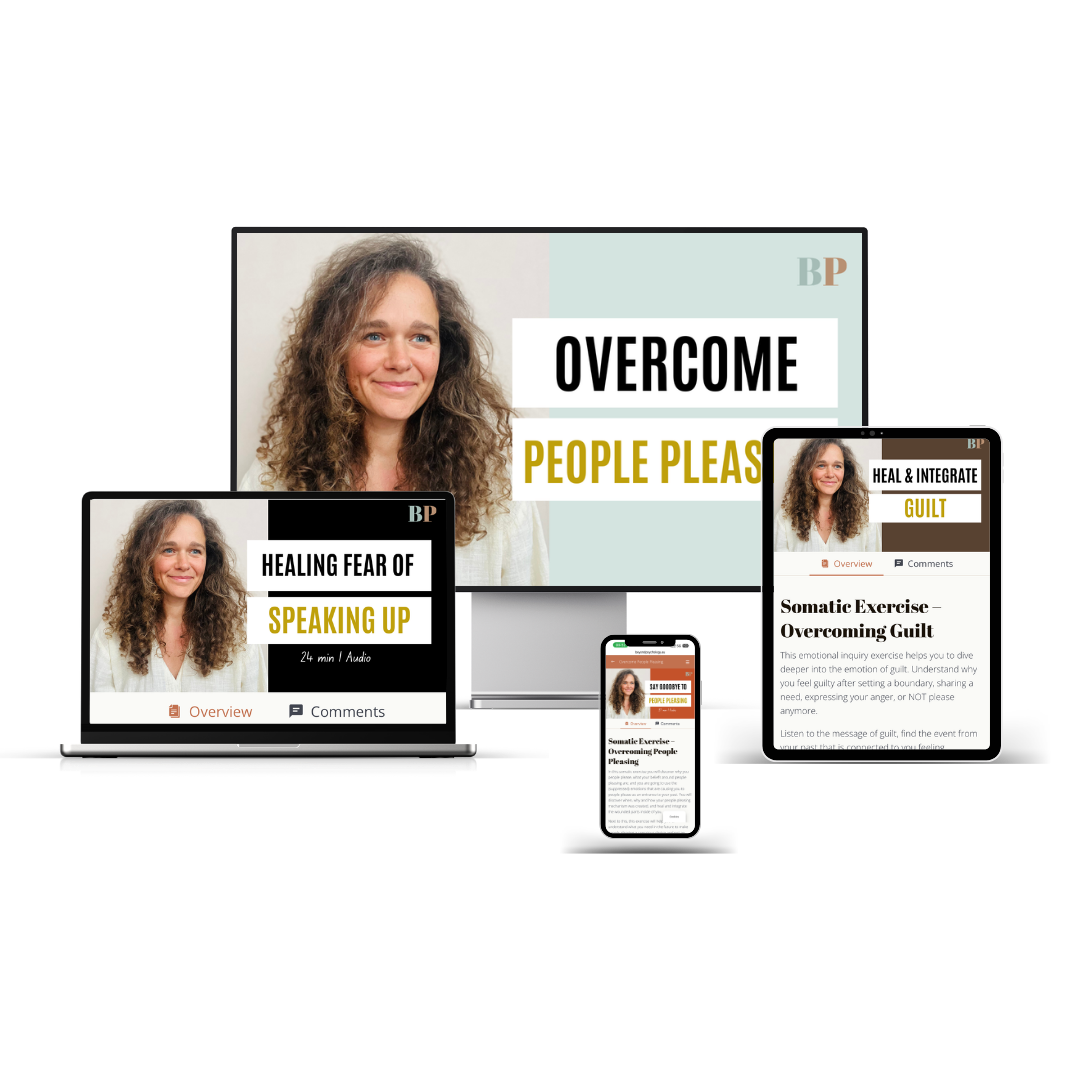
Overcoming People Pleasing Toolkit
Say goodbye to the exhaustion of a body that carries everyone else’s comfort, and say hello to the woman you were before you learned to please, with this complete somatic toolkit for women who are done shrinking to keep everyone else comfortable.
Shop now for €197
4. Societal Gaslighting of Emotionally Intelligent Women
Because here is the paradox I keep coming back to. Many of these women are not shallow, not unintelligent, not disconnected from feeling. Quite the opposite. Many of them are sensitive, perceptive, deeply attuned, the kind of women who notice what others miss, who feel the room before anyone speaks. But somewhere along the way, they learned to distrust that sensitivity. They learned that what they sensed and felt was not enough, not credible, not serious, unless it could be translated into something rational, something measurable, something that could hold its own in a room built by and for a different kind of mind.
So they intellectualized their empathy. They took what was fluid and alive inside them and pressed it into the shape of argument, of logic, of defensible positions. Not because the feeling wasn’t real, but because the feeling alone was never enough to be taken seriously. And once empathy has to prove itself through rational discourse before it’s allowed to exist, something essential gets lost in translation. It stops being a felt response to the world and becomes a position to defend.
This is where right-wing rhetoric offers something seductive, even to women who are, at their core, deeply feeling. It offers a permission slip to stay defended. To stay rational, composed, sharp, in control. To not have to feel the full, messy, overwhelming weight of collective pain: the pain of inequality, of displacement, of climate collapse, of everyone else’s suffering pressing in from every direction. Because once you let that in, really let it in, it demands something of you. It asks you to be moved, to be undone a little, to sit in complexity without a tidy answer. And for a woman who has spent a lifetime proving she is not too emotional, not too soft, not too much, staying rational can feel like the safer, more dignified place to remain.
So maybe what looks like ideology from the outside is, underneath, something closer to self-protection. Not a rejection of empathy, but a defense against the vulnerability of feeling too much in a world that never made room for it. The sensitivity is still there. It just learned, a long time ago, that it was safer to be reasoned than to be felt.
Closure: the same wound that produces entirely different survival strategies
And still, I find myself here, tangled in my own questions. Because if I trace every mechanism I’ve described so far back to its root, I find myself in each one of them. The rejection of the feminine, the trauma-bond with a system that once made me feel powerless, the suppressed emotions of a child who had to be strong. I recognize all of it. And yet I didn’t vote right-wing. So what was it, then, that made the difference?
Maybe it isn’t the wound itself that separates us. We all carry it, that much has become clear to me by now. Maybe it isn’t even the survival strategies, the coping mechanisms, the internalized misogyny or shame that follow from it, because those, too, seem to live in nearly all of us, in one form or another.
Maybe what separates us is what else was present alongside the wound. A person, an upbringing, a set of values, a ritual, a culture, some small proof somewhere along the way that softness didn’t have to mean danger, that being seen in your vulnerability could also mean being held rather than punished. Not the absence of the wound, but the presence of something that showed us another way was possible.
And, while finishing up my article I realized this: it goes even deeper than that. Because the true reason why one woman becomes one thing, and another one becomes something else, is because the same wound can produce two entirely different survival strategies. And those strategies – such as either fighting or submitting, to hit outward or to turn inward – once formed in the small world of a child’s home, don’t stay small. We scale them up. We turn them into identity, into belief, into the causes we fight for or the systems we align with.
Some of us learned, early on, to fight authority that made us feel small, to push back, to find our power by opposing what oppressed us. Others learned to move closer to authority, to master its language, to earn its approval, believing that proximity to power was the safest place to stand. Two children with the same wound, who grew into two women speaking entirely different political languages, both still, underneath it all, trying to make that original pain bearable.
I don’t say this to flatten the difference between us, or to suggest that all political choices are equally just. They are not. But I say it because I think it matters to understand that underneath disagreement, there is often the same original ache, dressed in different clothes. And I think that understanding does not have to lead to agreement. It can simply lead to humility, curiosity.
Because in the end, I don’t fully know why I chose one path and another woman chose the opposite one. As you can read, I have theories, threads, fragments of insight, but not a complete answer. And maybe that not-knowing is exactly where this essay needs to end. Not in judgment, and not in certainty, but in the same curiosity that softened my frustration into grief, and my grief into the willingness to look closer.
Because if my freedom is truly incomplete unless it includes yours, then perhaps understanding you, even you who chose so differently than I did, is not separate from my own liberation.
It might be part of it.
This article is part of the journey of becoming a free, emotionally mature, and sovereign human at Beyond Psychology. If this resonates, your next step is here: Your Yes and Your No — a free somatic practice to help you find your body’s signals again, before the noise of what others need from you.
Related Blogs

What Healing After a Traumatic Birth Actually Looks Like: An Ecological Exploration of Belonging and Return
Birth is an initiatory threshold. One that can leave a woman shattered and empowered in the same breath, sometimes in the same moment. Few women will have little to say about it. Fewer still will move through it unchanged. It is the place where the most vulnerable...

The Fawn Response: The Survival Strategy Hidden Under Niceness
Most women who find this article are not looking for a diagnosis. They are looking for a word. They have spent years being the one who smooths things over, who agrees even when they don't, who reads the room before they read their own feelings. They are exhausted in a...

Healing The Mother Wound: What is it & How to do it?
The relationship with your mother is the first place where your nervous system learns what it means to be in relationship at all. Long before you can think, speak, or understand your environment, your body is already forming conclusions about safety, presence, and...
