

Lately I have been feeling into the state of the world, and especially the state of the online world. What I see happening collectively mirrors what happens within each of us individually. The fights, the outrage, the quickness to label and divide are not random. They are the surface expressions of something deeper: the anatomy of our collective emotional wounds.
Polarization, to me, is not just about clashing opinions. It is about the clashing of defense systems. Beneath every ideological battle lives a nervous system trying to stay safe. Beneath every rigid conviction lives an emotion that has not yet been felt. When we begin to understand this emotional anatomy, the layers of pain, protection, and projection that shape our conflicts, we start to see polarization for what it really is: not a sign of moral decay, but a cry for healing.
Below you can watch the video of Myrthe Glasbergen, MSc. about this topic. Prefer to read on? Just scroll past the video.
The Layers of Conflict
Every conflict has layers. On the surface we see the debate, the arguments, the performance of certainty. Beneath that lies the protective layer, the coping mechanisms, the masks, and the shame-based identities that were once built to protect us. And at the deepest level lives the wound itself: the grief, anger, shame, loneliness, and fear we have spent our lives trying not to feel.
We often think we are fighting for truth or justice, but most of the time we are fighting for the survival of our own identity, the one we built around our pain. We argue to stay safe. We defend to stay intact. We polarize because feeling is more frightening than fighting.
How Suppression Shapes Identity
As children, many of us were left alone with emotions too big to handle. We cried without being met, felt anger without being guided, experienced chaos without protection. And because there was no emotionally mature adult to help us regulate, we learned to suppress. We learned to control, to please, to dominate, to achieve, to disappear. Anything but feel.
Those survival strategies eventually became our personality. The strong one. The good one. The angry one. The moral one. The independent one. They became our truth, our ideology, our political position. Yet behind each identity lives the same fear, the fear of being powerless, unseen, unprotected, or alone.
Over time we fused with these masks so tightly that we forgot what they were protecting. The grief was buried, the rage was exiled, and the nervous system made a vow: I will never feel that again. That vow, carried forward into adulthood, becomes the emotional blueprint behind our worldviews. We do not realize that our opinions often serve as guards around our pain.
———— read on below the ad ————
free guided somatic session
Your Yes & Your No
The 17-minute practice to stop abandoning yourself.
The very first step back to yourself. A free guided somatic session to come back to your body, your intuition, and the difference between a true yes and a conditioned one.
17 min ・ free audio
The Two Poles of Suppression
When you look closely, you can see that most of us suppress one of two emotional poles. Some of us are hurt suppressors. We reject vulnerability, softness, and grief. We identify with strength, independence, and control. Others are anger suppressors. We reject power, boundaries, and assertion. We identify with empathy, sensitivity, and moral righteousness.
Both are trauma responses. Both are incomplete. And both, when lived collectively, feed the polarization we see today.
Anger Suppressors
On one side, there is the collective of those who have learned to live inside their hurt. Their identity revolves around pain, victimhood, sensitivity, and compassion. They long for peace, but often confuse self-silencing, pleasing, fawning, niceness, helplessness, or emotional collapse with being kind or peaceful. They fear their own anger because it once caused rejection or harm.
Hurt Suppressors
On the other side, there is the collective of those who have learned to live inside their anger. Their identity revolves around power, control, and dominance. They prize independence, rationality, and strength. They fear their own vulnerability because it once brought humiliation or danger.
Each side rejects what the other carries. The hurt reject the angry, because anger feels unsafe. The angry reject the hurt, because vulnerability feels weak. Both sides mistake their suppression for truth. Both sides believe they are fighting for morality, justice, or freedom, but they are really fighting for emotional safety.
Projection: Fighting Our Disowned Selves
This is the tragedy of polarization. Each side is fighting the part of themselves they have disowned, projected onto the other. The left rejects the right’s dominance and control because it mirrors the aggression they have buried. The right rejects the left’s empathy and vulnerability because it mirrors the helplessness they cannot bear to feel.
When hurt and anger are split apart like this, society becomes a battlefield of mirrors. Each group reflects to the other what it refuses to integrate in itself. And instead of facing the pain underneath, we defend, attack, and perform certainty. The fight gives us a sense of power, the illusion of safety. But it keeps us emotionally frozen.
The Collective Wound Beneath It All
When we strip away the ideologies, the slogans, and the outrage, what remains is the wound of unworthiness. The quiet, pervasive belief that who we are is not enough. Generations of people have been raised in systems that demanded obedience over authenticity, that used shame, guilt, and fear as tools of control. Systems that rewarded performance, perfection, and compliance while punishing vulnerability, individuality, and emotional truth.
From an early age, we learned to adapt in order to belong. We learned to smile when we wanted to cry, to agree when something felt wrong, to hide our anger, our needs, our tenderness. We learned that authenticity could cost us love, safety, or acceptance. So we split ourselves in two, the part that performs and survives, and the part that quietly carries the grief of never having been met as we truly are.
The Trauma of Disconnection
This is not a personal flaw. You are not broken. The system is. We live in a world that conditions us to disconnect from our bodies and emotions to fit into structures that were never built for human wholeness. Patriarchy, capitalism, religion, and colonialism all share this emotional architecture. They prize order over empathy, control over connection, hierarchy over humanity. They raise generations of emotionally illiterate adults who confuse suppression with strength, obedience with worth, and adaptation with love.
The Foundation of the Emotional Anatomy of Polarization
Layered on top of that are the wounds passed through families, the intergenerational trauma of parents who never learned to feel safe in their own authenticity, who carried their unworthiness into their parenting, who taught us through their silence, their shame, or their absence that certain emotions were too much, that our needs were a burden, that our voice was dangerous.
The mother wound. The father wound. The absence of emotional attunement. Together they form the foundation of this collective wound of unworthiness. A wound that whispers be good, be quiet, be strong, be small, be pleasing, be right, just don’t be you. I write more about this in my e-book Unshame Yourself.
This is the soil from which polarization grows. A society built on emotional suppression will always produce people at war with themselves, and therefore with each other. When authenticity is unsafe, we choose identity instead. When feeling is forbidden, we turn to ideology. And when connection has been replaced by control, we forget that our shared humanity was the point all along.
———— read on below the ad ————
Start Healing Triggers: Shop Trauma-informed Healing Tools
-

Overcome People Pleasing Toolkit
€ 97,00 -

Stay – A Guided Somatic Session for the Fear of Disappointing Others
€ 27,00 -

Innocent – A Guided Somatic Session for Overcoming Guilt
€ 27,00 -

Worthy – A Guided Somatic Session for the Wound of Unworthiness
€ 27,00 -

Reparented – A Guided Somatic Session for Inner Child Reparenting
€ 27,00 -

Boundaries – A Guided Somatic Session for Setting Boundaries
€ 27,00 -
Sale!

Unshame Yourself: Book + Workbook
Original price was: € 28,00.€ 22,99Current price is: € 22,99. -
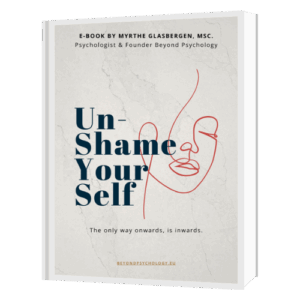
The Unshame Yourself E-book: A Book on Healing Shame and Unworthiness
€ 17,99
The Way Forward
Healing polarization begins not in debate, but in embodiment. It begins with the courage to feel what we have been protecting for generations. It begins with emotional maturity, the capacity to hold both anger and hurt without collapsing into either.
We cannot heal by convincing each other with words. Convincing is another mask, another attempt to control. The work is to sit with what is triggered inside us when we disagree. To breathe through the shame, the rage, the fear, until we no longer need to project it outward. To grieve what was lost and reclaim what was exiled.
This kind of healing is not passive. It is profoundly active. It is what restores power to its natural place, not as domination but as presence. When anger becomes clean, it sets boundaries without destroying connection. When grief is allowed, it softens without collapsing. Emotional maturity is not the absence of charge, but the ability to hold it with integrity.
Only from that place can we listen again. Not to agree, but to understand. Because when we feel what we have been avoiding, we realize that beneath the surface we all long for the same things: safety without control, belonging without obedience, freedom without domination, power that includes rather than excludes.
Integration and Repair
So the invitation is simple, but not easy. Sit with one trigger today. Feel it in your body before turning it into words. Let it speak to you. Ask what it protects. Ask what it needs. Give it breath. Then listen to someone you usually resist. Not to argue, but to see what part of yourself they awaken.
This is how we begin to integrate the emotional anatomy of polarization back into the collective body. By feeling what we have been trained to suppress. By reclaiming the disowned parts of ourselves that we have turned into enemies.
We do not need more performance of progress. We need presence. We need emotional literacy. We need the courage to grieve together and to get angry together without turning that energy into war.
The Emotional Anatomy of Polarization: A Mirror of Our Deepest Wounds
Because in the end, polarization is not a failure of politics. It is a failure of intimacy. A failure of our collective ability to sit with discomfort, to stay open when we are hurt, to keep relating when we disagree. Healing that failure begins with you and me, with every moment we choose to feel instead of fight.
This is the emotional anatomy of polarization. Not a clash of opinions, but a mirror of our deepest wounds. A reminder that what divides us most violently is what connects us most deeply. And that the only way forward is not through victory, but through integration, through learning to hold, at last, the full spectrum of what it means to be human.
Go Deeper
Ready for a next step? Explore our paid tools & programs.


Related Blogs

The Truth About Why You Feel Guilty For Choosing Yourself
Guilt shows up the moment you start to change. It shows up when you finally set the boundary, when you stop answering every call, when you choose the version of your life that actually feels like yours instead of the one everyone around you has come to expect. Feeling...

Fear of Abandonment: This Is Why You Fear Being Alone
Fear of abandonment rarely announces itself as fear. It shows up as the email you rewrite six times before sending, the boundary you almost set and then quietly let go of, the business idea that stays in a notebook instead of becoming a website. It shows up as the...

The Truth About Why You Can’t Orgasm With A Partner
Alone, you know exactly what to do. Your body finds its way there without effort, without negotiation, without anything standing in between you and what you feel. With a partner, something closes that was open only hours before. You get close and it turns back on...
