

Emotion regulation is the new rich. Not because calmness is a status symbol, but because learning to regulate your emotions turns you into a wiser, grounded, emotionally stable adult. When you can work with your feelings instead of fighting them, you stop living from hurt, pain, fear, or reactivity. You move toward clarity, authenticity, creativity, and inner stability. Emotion regulation techniques help you shift from being a victim of your emotions to becoming the one who steers your life, your relationships, your decisions, and your direction. Furthermore, they are essential for anyone who wants to understand and work through the intensity of their emotional world.
Whether you struggle with anger, anxiety, overwhelm, shutdown, or emotional reactivity, your emotional system doesn’t need to be controlled. It needs to be understood. Most people never learned how to regulate emotions, especially if they grew up with emotional neglect, inconsistency, or a family system where feelings were ignored, dismissed, or punished. In that environment, emotions become overwhelming because they were never met with safety.
In this article we explore what emotion regulation really means, why it often feels so difficult, and which practical emotion regulation techniques help you calm your body, move through suppressed feelings, and reconnect with your authentic self. At the end of the blog you will also find tools and guidance that support you on this journey.
This blog is based on our video in which we take you through every step of our emotion regulation techniques. Prefer to read on? Just scroll below the video.
What Emotion Regulation Really Means
Emotion regulation is not about suppressing emotions or forcing yourself to stay calm. It is the ability to notice what you feel, stay connected to yourself while the emotion is present, and move through the experience without abandoning your needs. The goal is not to stop feeling. The goal is to create enough inner safety so your emotions can move and complete.
Healthy emotion regulation techniques help you navigate any emotion in a grounded and mature way. They support the nervous system, increase self-awareness, and help you respond instead of react. And although these skills can be learned at any age, they are often hardest for those who grew up without emotional safety.
Why Emotion Regulation Is Hard for So Many People
Emotion regulation becomes difficult when your emotional world was not met with attunement. If your parents were overwhelmed, unavailable, unpredictable, or emotionally immature, you learned to disconnect from your feelings. This disconnection becomes automatic. It leads to:
💎 Difficulty recognizing what you feel
💎 Shutting down or freezing
💎 Exploding or becoming reactive
💎 Feeling overwhelmed by small triggers
💎 Feeling anxious without knowing why
💎 Feeling angry without understanding the root
💎 Turning emotions inward
This is not weakness. It is a trauma response. Your nervous system adapted to survive. Emotion regulation techniques help you slowly rewire this pattern so you can feel without drowning, express without collapsing, and stay connected to yourself even in difficult moments.
How to Regulate Emotions: The Core Skills
Emotion regulation skills fall into three main categories:
Awareness: noticing and naming what you feel
Somatic presence: staying in your body while you feel
Expression and integration: letting the emotion move in a safe and regulated way
When these three layers work together, you begin to feel calmer, clearer, and more in control of your internal world. The next section walks you through ten practical emotion regulation techniques that help you move through any emotion.
——– read on below the ad ———-
free guided somatic session
Your Yes & Your No
The 17-minute practice to stop abandoning yourself.
The very first step back to yourself. A free guided somatic session to come back to your body, your intuition, and the difference between a true yes and a conditioned one.
17 min ・ free audio
The 10 Emotion Regulation Techniques You Can Use Anytime
Step 1. Become Aware of the Dysregulation in Your Body
When an emotion rises, your body is the first place where dysregulation shows up. Before you can regulate, you must notice. Bring awareness to your breath, your heartbeat, your posture, your jaw, your stomach, your chest. Ask yourself: what is happening inside me right now?
Step 2. Locate the Feeling in Your Body
Every emotion lives somewhere in the body. Close your eyes, breathe slowly, and locate where you feel discomfort, tension, heat, pressure, or contraction. This helps you shift from thinking about the emotion to actually feeling it.
Step 3. Observe and Investigate the Sensations
Describe the sensations. Is it tight, warm, cold, sharp, buzzing, heavy, moving, stuck? This is one of the most foundational emotion regulation exercises because it helps your nervous system understand that you are here and present with the emotion rather than avoiding it.
Step 4. Presence: Listening to the Sensations
Stay with the emotion without judging it or pushing it away. When you stop fighting your feelings, they begin to soften. Take slow breaths and let the sensation unfold. Presence is one of the most effective emotion regulation techniques for anxiety and overwhelm.
Step 5. Communicate With the Emotion
Ask the emotion questions. Emotions carry information, boundaries, and unmet needs. You can ask: Who are you? Why are you here? What are you protecting? What do you want me to know? What do you need right now?
——– read on below the ad ———-
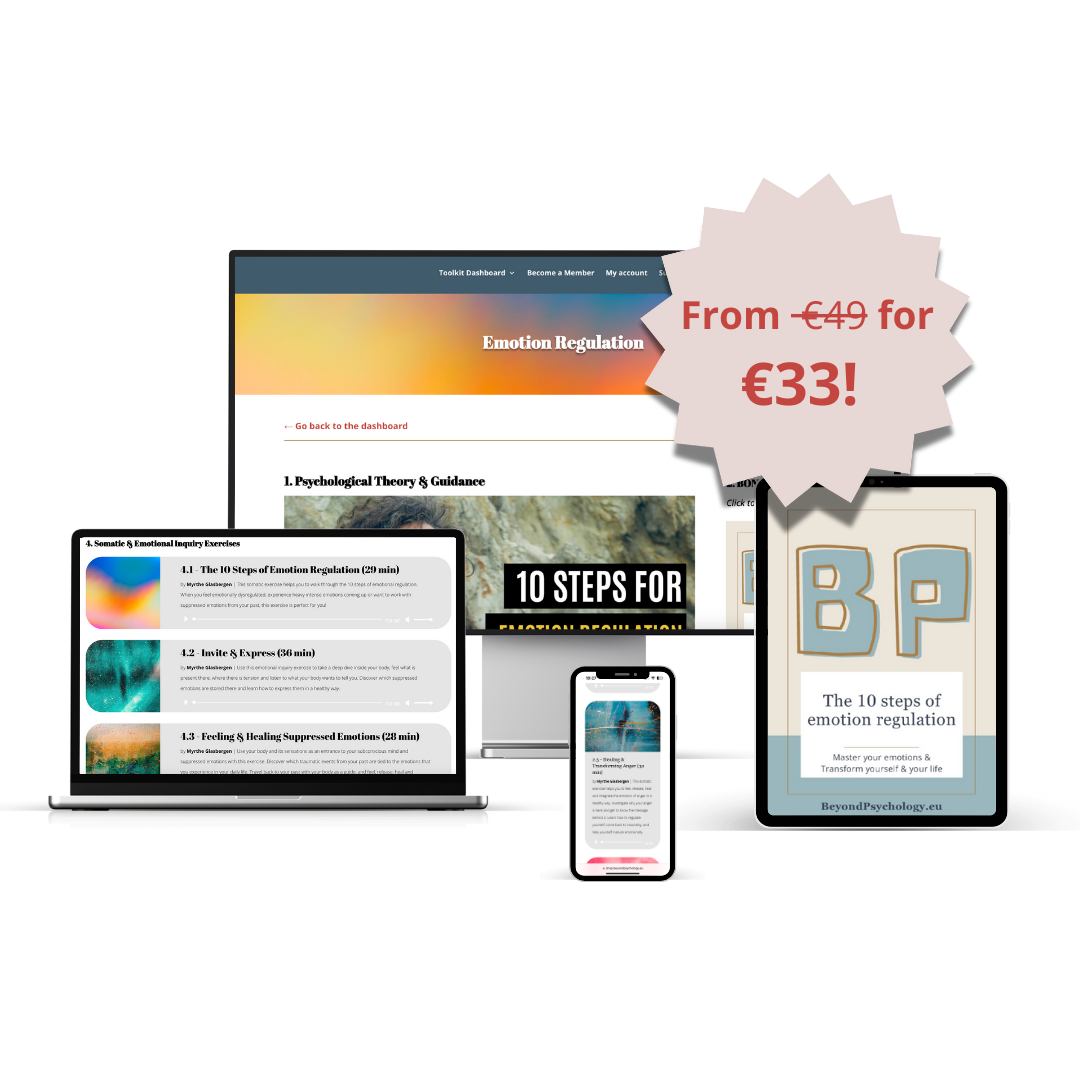
The Emotion Regulation Toolkit
Our Emotion Regulation Toolkit consists of 8 of our best healing tools that help you to heal from your past, release suppressed emotions, and transform yourself and your life.
Shop now for Only €49!
Step 6. Expression: Give Voice to What You Feel
Some emotions need expression. This can be through writing, movement, sound, or physical release. This step is especially helpful for anger regulation, because anger often carries suppressed boundaries or unprocessed hurt. Expressing the emotion safely helps the pressure leave your system.
Step 7. Find the Core Emotion
Often the first emotion you feel is not the real one. Anger may mask hurt. Anxiety may mask fear. Irritation may mask sadness. Ask the emotion if it is protecting something deeper. What is underneath this?
Step 8. Presence: Breathing and Soothing
Return to calm by slowing your breath and grounding your body. Let your system know you are safe. This is where the nervous system completes the regulation cycle.
Step 9. Find the Unmet Need
Every emotion has a need attached to it. Ask: What do I need right now? Connection? Rest? Space? Reassurance? Support? Expression? Boundaries? Listening to this need brings emotional completion.
Step 10. Reflection and Inspired Action
Reflect on what you learned. Let the insights guide you toward aligned, practical action. Emotional integration happens when you respond to your needs instead of repeating old survival patterns.
——– read on below the ad ———-
Learn Emotion Regulation Techniques: Shop Our Tools
-

Overcome People Pleasing Toolkit
€ 97,00 -

Stay – A Guided Somatic Session for the Fear of Disappointing Others
€ 27,00 -

Invitation – A Guided Somatic Session for Releasing Suppressed Emotions
€ 27,00 -

Innocent – A Guided Somatic Session for Overcoming Guilt
€ 27,00 -

Boundaries – A Guided Somatic Session for Setting Boundaries
€ 27,00 -
Sale!

Unshame Yourself: Book + Workbook
Original price was: € 28,00.€ 22,99Current price is: € 22,99. -

Release – A Guided Somatic Session for Orgasm Blockages
€ 27,00 -
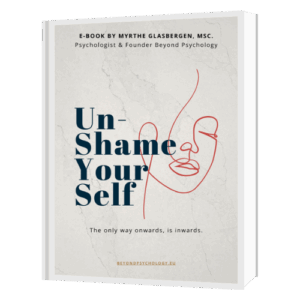
The Unshame Yourself E-book: A Book on Healing Shame and Unworthiness
€ 17,99
Emotion Regulation in an Emotionally Immature World
Most people were never taught how to regulate emotions because they grew up in systems that prioritized survival over emotional truth. Learning emotion regulation techniques is not only a personal healing journey; it is an act of emotional maturity in a world that often lacks it. When you learn to regulate your emotions, you break cycles of suppression, reactivity, and self-abandonment.
You become a steadier human being. You stop fighting your inner world. You begin to understand yourself more deeply. And you create space for relationships, work, and life to feel more grounded and connected.
Your next step
At Beyond Psychology we help you understand your emotional world in a trauma-informed, body-centered, and deeply human way. If you want to continue this work and develop stronger emotion regulation skills, you can explore the Emotion Regulation Toolkit with guided practices to help you regulate, process, and integrate your emotions.
You can also download Unshame Yourself, our e-book that helps you understand shame, suppression, and the emotional patterns underneath dysregulation. If you prefer personal support, explore 1-on-1 Guidance or join our Membership for ongoing emotional tools, somatic practices, and guidance from psychologists and trauma-informed therapists.
Go Deeper
Ready for a next step? Explore our paid tools & programs.


Related Blogs

The Truth About Why You Feel Guilty For Choosing Yourself
Guilt shows up the moment you start to change. It shows up when you finally set the boundary, when you stop answering every call, when you choose the version of your life that actually feels like yours instead of the one everyone around you has come to expect. Feeling...

The Truth About Why You Can’t Orgasm With A Partner
Alone, you know exactly what to do. Your body finds its way there without effort, without negotiation, without anything standing in between you and what you feel. With a partner, something closes that was open only hours before. You get close and it turns back on...

The Truth About Emotional Eating: Why You Eat More Than You Need
You know the moment, even if you have never named it. The body has had enough, it has already given its quiet signal of fullness, and still you find yourself going back to the kitchen, to the cupboard, to whatever is within reach, eating faster and quieter than usual,...
