

Most women already know.
They know he is not the right one. They know this is not the life they actually want. Somewhere beneath the performance of contentment, they know they have accepted second best.
And they stay anyway.
Not because they are foolish, and not because they cannot see it. But because the world taught them, thoroughly, from a very young age, that the alternative is worse. That a woman alone is a woman who failed, and that if they let go of the conventional path, there will be nothing on the other side. No one will come. Nothing will work out. Carrying themselves alone is not something they were ever taught to believe they could do.
So they stay, accommodate, and manage. Day after day, they make themselves smaller and more palatable and easier to be around.
This is not a character flaw. It is what happens when you condition a woman out of trusting herself. And it is why so many women keep choosing the wrong man, not once, but again and again, in different shapes and different faces, until something finally breaks open.
——- read on below the ad ——-
free guided somatic session
Your Yes & Your No
The 17-minute practice to stop abandoning yourself.
The very first step back to yourself. A free guided somatic session to come back to your body, your intuition, and the difference between a true yes and a conditioned one.
17 min ・ free audio
The Wound That Was There Before He Arrived
To understand why women keep choosing the wrong man, we have to go further back than the relationship. We have to go back to the world a little girl was born into, and what that world taught her about who she was allowed to be.
We are living in a society that was built by men, for men. Specifically: white, straight, heteronormative men who lived centuries ago and whose worldview became the foundation of the patriarchal, capitalist structures we are still navigating today. A world where women were not permitted to own property, open bank accounts, or make decisions about their own bodies without male permission within living memory. As a result, women grew up in a world where the law, medicine, religion, and culture were all designed around male authority as the natural default, with women as guests in that world, welcome only when they were useful, agreeable, and non-threatening.
Because of this, the women who raised us learned something early and carried it in their bodies: that their wild, free, intuitive nature was dangerous. From a young age, their anger was shamed, and they were taught that their power was something to hide, not celebrate. They learned to nod, to smile, to please, to caretake, and to cater. Not because they wanted to, but because their emotional and financial survival genuinely depended on it. Trading their authenticity for safety was not a choice. It was the only option available to them.
Intergenerational trauma
A wound this deep does not stay contained in one generation. Women who have been suppressing their truth, their power, and their anger for so long, do not simply wait quietly. They find other ways to get what they need. Ways that are covert, indirect, and sometimes manipulative, not out of malice but out of a very old belief that asking directly is not safe. They tell themselves they can see his potential. Rather than seeing clearly who he is now, they invest in who he could become, which is a way of avoiding the truth of what they are tolerating right now. As a result, they stay in relationships they know are wrong and call it love, because the alternative feels unsurvivable.
And then, without meaning to, they pass all of this on. The woman who tells her daughter not to be too much. Who dismisses another woman’s full expression, or who shames her child for being self-centered or choosing herself. A mother who teaches her girl, through everything she models and everything she silences, that the way to stay safe in this world is to make yourself agreeable, to center men, to never ask too directly for what you need. These are not failures of individual character. Rather, they are the internalized logic of a system that taught women to police each other into smallness so the system would not be threatened. It is a survival mechanism. And survival mechanisms get inherited.
The Collective Mother Wound
This is what we call the collective mother wound. Not because our mothers were bad women. Because they were wounded women living in a world that punished female power and rewarded female compliance. Suffering greatly for it, many became anxious, depressed, emotionally unavailable, unstable or unpredictable. Not as personal failures, but as natural responses to a life spent denying their own truth. And because healing was never available to them, because the freedom to know and live from their own bodies never came, they passed the wound on.
Your mother may have seen something in you, perhaps your anger, your strength, your refusal to be small, and instead of celebrating it, she may have feared it. Tried to contain it. Because it activated everything she had spent a lifetime suppressing. Conditioning moves through the bodies of women this way, generation after generation, until someone decides it ends here.
Little girls growing up inside this inheritance learned one central lesson: the highest thing you can achieve in this world is to be chosen by a man. Not to know yourself, or to trust yourself, but to be chosen, by him.
Performing Femininity: What it Actually Means
Before we can talk honestly about why women keep choosing the wrong man, we have to talk about something that most people have never examined: the performance of femininity. Not femininity itself, but the performance of it. These are not the same thing, even though most women have never known the difference.
Performing femininity is not about how you naturally are. It is the version of womanhood that patriarchal, capitalist, religious, and cultural systems have required of women in order for them to be deemed acceptable, lovable, and worthy of being chosen. A set of behaviors, aesthetics, emotional registers, and relational postures that conditioning shaped women into from childhood, through social approval, through shame, through the subtle and not-so-subtle feedback of the world around them.
It looks like speaking with a softer, higher voice than you naturally have. Moving through space as if you are always slightly apologizing for taking it up. Laughing in a way that is palatable rather than real. Making yourself smaller in rooms where men are present. Performing interest in things that do not interest you, performing agreement when you feel disagreement, performing contentment when you feel nothing close to it. Dressing for the male gaze before you dress for yourself, and not even being aware that you are doing it. Prioritizing being liked over being honest, being chosen over being whole. It can even look like doing things ‘like a girl’ – which means moving your body in certain ways, running a certain way, throwing a ball a certain way, or dancing a certain way.
The Conditioning of the Good Girl Script
Nobody chose this performance, conditioning created it. From the time girls are very young, they are conditioned to be the good girl: they receive constant feedback about which version of themselves is acceptable.
Adults correct the girl who is loud, assertive, angry, or self-focused, and praise the girl who is gentle, accommodating, pretty, and easy. Schools, families, churches, social media, fashion, advertising, and the stories we tell about what love looks like all participate in teaching girls that their value lies in their eligibility, in their suitability, in how appealing they are to the people around them, and most centrally, to men.
To maintain this eligibility, girls learn to override the parts of themselves that do not fit the performance. Anger goes first, because angry women are difficult and unlikeable. Directness follows, because women who ask for what they want are demanding. Ownership of their own sexuality disappears next, because female desire is threatening when it is not in service of someone else. Power gets buried deepest of all, because powerful women unsettle the dynamics that keep the system in place. These parts do not disappear. They go underground, and become the shadow.
What this means for relationships is this: a woman who has spent her entire life performing femininity has been systematically cut off from her own inner knowing. The signals her body sends her get overridden, and the truth she feels gets doubted. Staying with discomfort becomes easier than risking the disruption of speaking it. Her real self, the full, messy, powerful, angry, desiring woman she actually is, starts to feel like too much for the world. As a result, she performs, and from within that performance, she chooses.
——- read on below the ad ——-
Start Your Journey: Shop Trauma-informed Healing Tools
-

Overcome People Pleasing Toolkit
€ 97,00 -

Stay – A Guided Somatic Session for the Fear of Disappointing Others
€ 27,00 -

Innocent – A Guided Somatic Session for Overcoming Guilt
€ 27,00 -

Worthy – A Guided Somatic Session for the Wound of Unworthiness
€ 27,00 -

Reparented – A Guided Somatic Session for Inner Child Reparenting
€ 27,00 -

Boundaries – A Guided Somatic Session for Setting Boundaries
€ 27,00 -
Sale!

Unshame Yourself: Book + Workbook
Original price was: € 28,00.€ 22,99Current price is: € 22,99. -
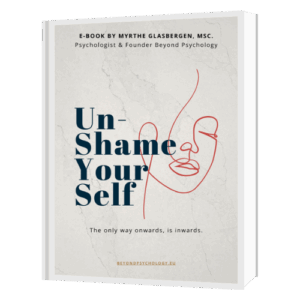
The Unshame Yourself E-book: A Book on Healing Shame and Unworthiness
€ 17,99
Why You Choose Who You Choose
When a woman is disconnected from her own truth, she does not choose from her truth. She chooses from her conditioning. And this is why so many women keep choosing the wrong man, sometimes the kind, gentle man who loves her but cannot match her, and sometimes the dominant or even harmful man who mirrors back a distorted version of the power she has buried inside herself. Both are versions of the same wound, even if they look completely different from the outside.
The kind, gentle man who loves her is often chosen because he feels safe. He is not a threat, and will not challenge her or push back or expect her to show up as her full self. She can manage him, quietly, from within the performance. And not being truly met means not having to risk the exposure and shame that comes with real intimacy. He is comfortable in the way that familiar smallness is comfortable.
The dominant man is chosen for different reasons, but the same roots. Having been conditioned to give her power away to male authority, she may recognize something in him that feels like strength. She is drawn to the energy she has suppressed in herself, played out in someone else. And she stays, even when it hurts, because on a deep nervous system level the dynamic feels like something she recognizes. Like the love she learned to accept early on.
The Surrogate You Are Really Looking For
Beneath both patterns is something that takes real honesty to see. Women do not only choose partners. Without knowing it, they choose surrogates. Through romantic relationships, they are trying to get something that childhood never gave them: the father who saw their strength and validated it, the mother who was present enough to mirror them, the love that was not conditional on performance. This does not happen consciously. It happens beneath the surface, in the body, in the pull toward whoever feels familiar.
What Happens to Your Intuition
There is another layer that has to be named here, because it sits at the heart of why the pattern is so hard to break.
Most women have felt, at some point, a quiet knowing that something was not right. A feeling in the body before the mind has the language for it. The problem is that acting on that knowing requires exactly the capacities that performing femininity has systematically eroded. Following through on what the intuition is saying means being willing to set a boundary, to create conflict, to disappoint someone, to risk disconnection. It means saying clearly: this does not work for me. These are not things women are typically raised to do without enormous shame and fear attached to them.
So what happens instead is this: the intuitive hit arrives, and almost immediately, a woman begins to talk herself out of it. She doubts herself. She looks for evidence that she is wrong. She tells herself she is being too sensitive, too demanding, too much. She learned to suppress and dissociate from her own anger, her own no, her own boundaries, because staying with that knowing would have meant leaving the performance. And leaving the performance meant risking rejection, abandonment, being cast out. So she overrides herself. She accommodates and waits and manages.
The Covert Agenda You Do Not Know You Have
Because direct expression never felt safe, because nobody ever taught her she was allowed to ask for what she needs, she finds other ways. Covert ways. Reading between the lines, dropping hints, using warmth or compliance or sexuality strategically. Without realizing it, she becomes indirect. And indirectness, over time, becomes a kind of dishonesty toward herself and toward the man she is with. Not because she is a dishonest person, but because straightforwardness about who she is and what she needs was never modeled, never permitted, never safe.
This is how women end up years into relationships they knew from early on were not right. Moreover, this is how the pattern repeats. Not because women are weak, dishonest, foolish, or bad, but because the entire architecture of their conditioning oriented them toward choosing safety over truth.
The Way Through: Shadow Work
The journey of becoming a woman who no longer loses herself in relationships, who no longer keeps choosing the wrong man out of fear or conditioning or unmet childhood need, is not fixed by empowerment courses or by being told to get “more in touch with your feminine energy”. That is repackaged patriarchy. It is another version of the soft, gentle, accommodating girl the system has always wanted, only dressed up in the language of wellness.
The real work is shadow work. Doing shadow work requires understanding what your unmet childhood needs actually are, not in the abstract but in the specific: what did you not receive that you are still trying to find in relationships? It means seeing the mechanisms you have created to get those needs met without asking directly, without risking the rejection that would come with full honesty.
Unshame Yourself
Becoming willing to see your own covert agenda, the ways you perform, manage, and maneuver to stay safe, requires first understanding what you feel most ashamed of and what you are suppressing the most, and then beginning to reverse that suppression (something I write about in depth in my e-book: Unshame yourself). Recognizing the ways you seek validation and approval covertly, the way you perform femininity to get what you want, and with that awareness, starting to grieve what was never given to you.
From there, the experiment begins. What happens when you let the performance down, even a little? What happens when you listen to your anger instead of immediately suppressing it? What do you actually want, separate from what conditioning shaped you to want? What does your body know that your mind has been trained to override?
Reparenting Yourself
This entire process is what we call reparenting yourself: becoming the mother and father you never had. In essence, it means learning to integrate the masculine and feminine inside yourself, so you do not have to borrow those qualities from someone else. As a result, you can protect yourself, carry yourself, and direct your own life without giving your center away to an authority outside of you.
Speaking what is true even when it creates discomfort becomes possible. Setting a boundary and staying with the fear that follows becomes possible. Understanding that disappointing someone is not the same as abandoning them, and that your first no does not need to be repeated ten times to be real.
Building financial independence is part of this too. Not because hyperindependence is the goal, but because economic dependence on a man recreates the same power dynamic that was there from the beginning: the little girl who needs to be kept, and the man who gets to decide whether she is worth keeping. That dynamic is not love. It is a wound given a costume.
What Becomes Possible
When a woman stops managing herself, stops shrinking her voice, stops performing contentment while knowing the truth beneath it, something becomes possible that was not there before.
Her decisions change. Not better in a moral sense, but freer. Coming from her actual center rather than from the fear of abandonment, the fear of being too much, the fear of ending up alone. Something her daughters have not seen starts to become visible in her, and perhaps something her own mother never got to live. Not success, and not even happiness, necessarily. But sovereignty. The capacity to be fully herself, to carry herself, to live in alignment with what she actually knows to be true.
The first free woman in a lineage does not just free herself. She breaks the transmission. What was passed down, the smallness, the performance, the acceptance of second best, stops there, and does not go forward.
And that is how we truly create change, first individually, and then collectively.
Healing doesn't wait for an appointment. Neither should the tools for it.
Related Blogs

The Truth About Why You Feel Guilty For Choosing Yourself
Guilt shows up the moment you start to change. It shows up when you finally set the boundary, when you stop answering every call, when you choose the version of your life that actually feels like yours instead of the one everyone around you has come to expect. Feeling...

Fear of Abandonment: This Is Why You Fear Being Alone
Fear of abandonment rarely announces itself as fear. It shows up as the email you rewrite six times before sending, the boundary you almost set and then quietly let go of, the business idea that stays in a notebook instead of becoming a website. It shows up as the...

The Truth About Why You Can’t Orgasm With A Partner
Alone, you know exactly what to do. Your body finds its way there without effort, without negotiation, without anything standing in between you and what you feel. With a partner, something closes that was open only hours before. You get close and it turns back on...
