

“The only way to deal with an unfree world is to become so absolutely free that your very existence is an act of rebellion.” – Albert Camus
If there is one thing I discovered after working with thousands of clients from all over the world – men and women, young and old, from every imaginable culture, religion, and financial state – it is this: we are all ashamed of who we truly are. We carry the same pain inside of us, the same gnawing fear: that if our inner essence were ever revealed, if our most authentic self were exposed, we would be abandoned or rejected. And so we hide. We hide behind masks and roles, behind status, addictions, perfectionism, people pleasing, and endless stories designed to protect us from the unbearable: the deep-seated belief that we are not worthy of the love or life we so crave. Although the stories differ, although the coping strategies vary, the essence is always the same. Every human being I have ever met carries the same wound: the wound of unworthiness.
At first I wondered why. How could it be that a banker in London, a farmer in rural Spain, a student in Morocco, and a mother in South America would all carry the same invisible scar? The answer came slowly, through my own lived experience and through listening to the hidden truths of my clients: we are all products of our parents and ancestors, who themselves were shaped by emotionally immature, oppressive systems. We are born into a society that thrives on shame and suppression – capitalism, colonialism, patriarchy, racism, religious dogma, and war – all of which have left behind a legacy of intergenerational trauma. Trauma that seeps into our DNA, our parenting, our family dynamics, and our daily lives.
This wound of unworthiness is not only personal. It is collective. It is systemic. And it lies at the root of both our individual suffering and the dysfunction of the world we live in.
This blog is based on our video about this topic. You can watch our video below. Prefer to read on? Just scroll down below the video.
Part I. How the Wound of Unworthiness Is Born
1.1 Childhood and the Forced Choice Between Attachment and Authenticity
Every child enters the world with a radiant authenticity, a life force unafraid to express itself. We cry when we are hungry, we laugh when we are delighted, we scream when we are angry. In the beginning, there is no shame. There is only truth. But quickly, most of us are faced with the most unbearable dilemma of childhood: if our environment forces us to choose between attachment and authenticity, we will always sacrifice authenticity.
Attachment is survival. Without the approval of parents, caregivers, and community, a child cannot live. And so we learn, much too early, to suppress our feelings, to mute our desires, to hide our joy or rage, to abandon the parts of us that feel unsafe. We trade our truth for belonging.
The messages are subtle but devastating. A girl is told she is “too sensitive” when she cries. A boy is told to “man up” when he feels afraid. A child is praised for being quiet when he is sad, rewarded for smiling when she is hurting, applauded for achieving when she is exhausted. We are taught that love is conditional, that belonging must be earned, and that only certain parts of us are acceptable.
By the time we reach adolescence, we are fluent in self-abandonment. We have learned to smile when we want to scream, to stay silent when we want to speak, to perform when we want to rest. We forget there was ever another way. And so the seed of unworthiness is planted: who I truly am is not enough.
1.2 Intergenerational Trauma and Collective Conditioning
This wound is not only created by parents; it is carried by entire lineages. Our ancestors endured colonization, displacement, war, famine, poverty, and oppressive regimes. To survive, they had to silence their grief, suppress their emotions, and conform to systems that denied their humanity. That trauma did not disappear. It was passed down through behaviors, beliefs, parenting styles, even epigenetic markers.
We inherit not only our family’s eye color and skin tone but also their shame, their survival strategies, their silence. This is what it means to carry intergenerational trauma. And because our societies – built on patriarchy, capitalism, and colonial logics – continue to operate in the same oppressive ways, the trauma is never interrupted. It is reinforced.
From the moment we are born, systems whisper to us: you are not enough. Not thin enough, not rich enough, not smart enough, not masculine or feminine enough. Advertising thrives on lack. Politics thrives on fear. Religion thrives on guilt. Capitalism thrives on scarcity. We are conditioned into unworthiness because it keeps us obedient.
1.3 Our Co-Dependent Relationship With the System
The tragedy is that the very systems that oppress us depend on us to uphold them. From a young age, we are taught that if we do not conform – if we do not work, perform, and obey – we will not survive. We are told that if we do not fit into the narrow mold of heteronormative, patriarchal respectability, we will be rejected, shamed, or excluded. And so we comply. We silence our authenticity not just to gain our parents’ approval but to gain society’s approval.
We live in survival mode. We trade our life for money, our time for status, our truth for belonging. And because we believe we need these systems to survive, we keep feeding them. Capitalism thrives on our exhaustion. Patriarchy thrives on our silence. Colonialism thrives on our amnesia.
The wound of unworthiness is not only a psychological scar, it is the very fuel that keeps these systems alive.
————— read on below the ad —————

Start Your Healing Journey With Our FREE Guide: Unshame Yourself.
Get FREE access to the e-book that’s helping people all over the world unlearn toxic conditioning, heal the wound of unworthiness, and reclaim their truth – unapologetically.
Part II. Living With the Wound of Unworthiness
2.1 The Shame-Based Identity
When a child repeatedly learns that their authentic self is unsafe, they create a shame-based identity. This is not an identity rooted in joy, creativity, or authenticity, but in defense and survival. It is the part of us that performs, pleases, achieves, or rebels in order to avoid rejection.
Psychologically, this identity is experienced as a chronic sense of defectiveness: something is wrong with me. It haunts us as adults, leaving us restless, empty, or lonely. Even when we succeed, even when others admire us, the shame-based identity whispers: if they knew the real you, they would leave.
2.2 Coping Mechanisms of Shame
To carry this unbearable wound, we develop coping mechanisms. Some of us become perfectionists, believing that if we achieve flawlessly, we will finally be worthy. Others become people pleasers, silencing their truth to keep peace. Some numb their emptiness with alcohol, food, sex, or scrolling. Others inflate themselves with narcissism or power, trying to escape their shame by dominating others.
Though these strategies look different on the surface, at their core they are the same: desperate attempts to avoid the raw pain of unworthiness.
2.3 The Reopening of the Wound in Adult Life
The wound of unworthiness does not remain in childhood. It follows us. Every time a boss silences us, every time a partner dismisses our needs, every time society rewards our compliance and punishes our truth, the wound re-opens. We are retraumatized again and again, reminded of the same choice: authenticity or belonging. And too often, the fear of rejection wins.
This is why healing unworthiness is not a one-time event. Because we live in a world designed to re-open the wound, healing becomes a lifelong practice of choosing authenticity, over and over again.
Part III. The Consequences of Unworthiness
3.1 Psychological and Emotional Suffering
When a wound remains unacknowledged, it festers. The wound of unworthiness is not a private scar hidden deep in the psyche, it spills into every corner of life, shaping how we think, how we love, how we work, and even how our societies function. It is the silent undertow beneath both our personal suffering and our collective dysfunction.
On a psychological level, the wound manifests as anxiety, depression, burnout, emptiness, restlessness. These states are often described as disorders, pathologized by psychiatry and reduced to chemical imbalances or maladaptive behaviors. But in truth, they are natural responses to an unnatural society. Symptoms of being forced to abandon our authenticity day after day. When a human being must sever themselves from their inner truth just to survive, suffering is inevitable. The tragedy is that instead of recognizing this as a systemic wound, we are told it is an individual flaw. We are given diagnoses, pills, and coping strategies, but rarely the deeper question: what if the real illness is the society that taught you to suppress your soul?
3.2 Relational and Collective Suffering
Relationally, the wound corrodes intimacy. If you believe you are unworthy of love, how can you truly receive it? If you fear rejection, how can you risk showing your needs, your vulnerability, your truth? Many of us repeat the same patterns: choosing partners who confirm our shame, silencing our desires to avoid conflict, settling for conditional love because unconditional love feels unimaginable. The unworthiness becomes a self-fulfilling prophecy: we do not believe we are worthy, and so we create relationships where our unworthiness is mirrored back to us.
And on the collective level, the consequences are staggering. Entire populations uphold oppressive systems because they fear they cannot survive outside them. Workers exhaust themselves in jobs that strip them of dignity because they believe they have no choice. Women silence their voices because they are told they are too emotional. Men suppress their tenderness because they are told it is weakness. Marginalized communities internalize the narratives of inferiority imposed on them by colonial and patriarchal histories. The wound of unworthiness is not just personal shame; it is the glue that keeps oppressive systems intact.
This is why unworthiness must be seen for what it is: not merely an inner insecurity, but the very architecture of our suffering. Without addressing it, we will keep treating symptoms instead of causes. Without addressing it, both therapy and politics risk remaining surface-level fixes to a problem that is rooted much deeper: the belief that human beings, in their essence, are not enough.
————— read on below the ad —————
Heal the Wound of Unworthiness




Part IV. Healing the Wound of Unworthiness
4.1 Awakening to the Wound
Healing begins the moment we dare to see the wound for what it is. Not as a private failure or a sign of personal weakness, but as something inherited, systemic, and collective. The shame you carry is not proof that you are broken; it is proof that you were forced to adapt to a world that could not hold you as you were. Realizing this can be a shock. For many, it feels like waking up in the middle of a dream and realizing that what you thought was your reflection in the mirror was never yours to begin with. You begin to see that the voice that told you “you are not enough” does not come from your essence but from generations of conditioning, from parents who were themselves silenced, from systems that needed you to doubt your worth in order to control you.
This awakening does not instantly dissolve the wound, but it changes the terrain. When you understand that the voice of unworthiness is not your truth, you stop confusing shame with identity. A space opens between who you are and what you were taught to believe about yourself. And in that space lies the possibility of freedom.
4.2 The Work of Unshaming
Awareness alone is not enough. Healing unworthiness requires us to do the painstaking, courageous work of unshaming ourselves. This is not a one-time ritual but a lifelong practice of reclaiming the parts of us that we abandoned to survive. It means meeting the grief of the child who was silenced, the rage of the teenager who was shamed, the loneliness of the adult who has lived behind a mask for too long.
To unshame is to welcome back what we thought was unlovable. It is to feel anger without collapsing into guilt, to cry without believing we are weak, to rest without feeling lazy, to desire without drowning in shame. It is to slowly rebuild trust with the parts of us we cut off in order to be accepted. This work can feel like death at times, because in order to come home to ourselves, we must let go of the identity we built to be safe: the perfectionist, the pleaser, the overachiever, the caretaker, the rebel. These roles once protected us, but they are not who we are.
Unshaming is therefore an act of grief as much as it is an act of liberation. We must grieve the years lost to self-abandonment, the relationships built on false selves, the energy wasted on trying to prove our worth. And in that grief, something softens. The wound that once defined us becomes the portal through which we meet our true selves again.
4.3 Choosing Authenticity in a World That Rewards Suppression
Even as we begin to heal, the world around us does not suddenly change. We still live in societies that reward silence and punish authenticity. We will still face rejection, judgment, misunderstanding. Healing, therefore, is not about reaching a place where life is suddenly easy or safe. It is about cultivating the resilience to choose authenticity even when it costs us belonging.
Every time you speak when you are afraid of being silenced, every time you rest when you are shamed for being unproductive, every time you say no when you are expected to please, every time you show your vulnerability instead of hiding it, you are healing. Not only yourself, but the very systems that depend on your silence.
Healing the wound of unworthiness is not a linear process. Some days, the old voices roar loudly. Some days, the shame feels unbearable. But slowly, with practice, you begin to realize that you are no longer the child who needed to betray herself in order to survive. You are an adult who can hold your own truth, even when the world cannot.
And perhaps the most radical realization of all is this: healing is not about becoming someone new, but about remembering who you were before the wound. The parts of you that were hidden away in shame are not lost. They are waiting. And as you bring them back into the light, you begin to discover that worthiness was never something you had to earn. It was always yours.
Part V. From Personal Healing to Collective Rebellion
5.1 Why Sensitive People Are Not Broken
In every generation, there are those who cannot fully numb themselves to the wound. They are the children who cry too loudly, the teenagers who refuse to fit in, the adults who are called too emotional, too intense, too fragile. Our culture often labels them as broken, as if their sensitivity were a flaw to be corrected. But in truth, they are the ones who keep humanity alive. Their pain is not a weakness but a sign of refusal. A refusal to adapt completely to a sick system, a refusal to bury their truth so deeply that it can never be recovered.
When you feel the wound of unworthiness so acutely that you cannot function the way society expects you to, it may in fact mean that your soul has resisted full domestication. You are still in touch with the grief of what was lost, the injustice of what is imposed, the possibility of what could be. Sensitive people often become the cycle-breakers, because they cannot continue the performance. They are the ones who say, something is not right here, and in doing so, they open the door for all of us to remember that there is another way.
5.2 Healing as a Radical Act
To heal yourself is not a private luxury. It is a political act. Because when you begin to withdraw your energy from shame, you stop feeding the systems that depend on it. When you unshame yourself, i.e. when you reclaim your voice, your body, your boundaries, your truth, you are not just healing your own life. You are refusing to participate in the cycle of suppression.
This is why oppressive systems work so hard to keep us ashamed. A person who believes they are unworthy is easy to control. They overwork, overgive, overcompensate. But a person who knows their worth is uncontrollable. They rest without guilt, they speak without apology, they refuse to trade their life for approval. Such a person is dangerous to the status quo, not because they fight violently against it, but because they simply refuse to obey its rules.
Healing, then, is not only about reclaiming personal freedom but about disrupting collective oppression. Every act of authenticity – every no spoken, every boundary set, every truth told – is a crack in the system. And through those cracks, light begins to enter.
5.3 Reimagining Systems Rooted in Worthiness
But rebellion is not enough. To dismantle the old without creating the new is to remain in despair. The work of healing unworthiness must also extend outward, into the creation of systems that do not thrive on shame, scarcity, and control, but on dignity, truth, and belonging.
Imagine communities where worthiness is not conditional on productivity or conformity, but assumed as birthright. Imagine schools where children are taught emotional literacy as seriously as mathematics, where their creativity is nurtured instead of shamed. Imagine workplaces where rest is respected, where cooperation is valued above competition, where people are measured not by how much they produce but by how much of themselves they bring to life. Imagine relationships where love is not a bargain but a sanctuary, where vulnerability is met with reverence, where boundaries are honored instead of punished.
This is not utopia. It is what becomes possible when enough individuals heal the wound of unworthiness within themselves and refuse to keep feeding it in the world outside. Our liberation is intertwined: as each person reclaims their worth, the ground beneath oppressive systems begins to erode. And slowly, what once seemed inevitable – patriarchy, capitalism, systemic shame – reveals itself to be fragile, dependent on our participation. When we stop believing in our unworthiness, the systems that fed on it lose their power.
————– read on below the ad ————-

🌿 Join Our Free Community, Away From Social Media
Inside our free community you’ll find connection, motivation, and daily inspiration to feel empowered and come home to who you truly are. Whether you’re just starting out or already deep in the work, this is your space to be reminded that you’re not alone.
Truly Free. Without Ads.
It’s truly free. By signing up you agree to our terms & conditions & privacy policy.

🧠 Start Healing With Your Psychologist In Your Pocket
Unlock access to our online library with all our offerings at once: our online community, all our trauma-informed tools, healing toolkits, and the powerful “Ask a Therapist” Q&A. Over €1000 worth of healing resources, designed to help you heal, break free & transform yourself and your life!
For Just €9,99/Month.
Conclusion: Remembering Our Birthright
The wound of unworthiness is perhaps the deepest wound of our time. It is both personal and collective, both ancient and immediate. It is what drives us to abandon ourselves, to exhaust ourselves, to silence ourselves. It is what keeps us obedient to systems that do not serve us. And yet, within this very wound lies the possibility of profound transformation.
Because the moment you turn toward your shame instead of away from it, the moment you begin to reclaim the parts of yourself you once disowned, the moment you remember that your worth was never lost… something shifts. You no longer live as a product of oppression but as a being who chooses authenticity, again and again, even when it is costly. You no longer feed the system with your silence but nourish life with your truth.
The path is not easy. It asks us to grieve, to rage, to sit with the unbearable. It asks us to shed identities we clung to for survival and to step into the rawness of who we really are. But on the other side of that grief lies freedom: the freedom Albert Camus spoke of, the freedom so absolute that your very existence becomes an act of rebellion.
The truth is simple, though radical: you were never unworthy. You were never broken. The shame you carry is not your essence but your inheritance. And the act of healing, of unshaming yourself, of remembering your birthright, is not only the way you reclaim your life. It is the way we, together, begin to heal the world.
Go Deeper
Ready for a next step? Explore our paid tools & programs.


Related Blogs

Do You Feel Like You Don’t Belong Anywhere? Read This.
Do you sometimes, or often, feel like you don’t belong anywhere? It doesn’t matter where you are, whether you’re with friends, family, at work, in a supermarket, at a festival, in a bar, or even just walking down the street. No matter the setting, you might feel like...

Healing The Mother Wound: What is it & How to do it?
In this blog, we will talk about the most important relationship in your life—your very first relationship, the one with your mother. When this relationship is distorted, it can result in the mother wound. This wound is a deep emotional and psychological pain caused...
Healing the Wound of Unworthiness
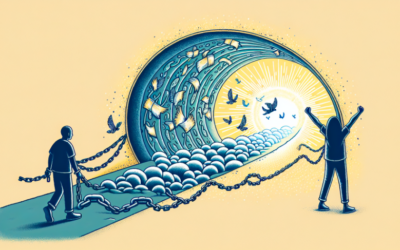
In a world that often demands conformity and suppression of our true selves, the wound of unworthiness can be a deep and pervasive challenge. This collective wound, rooted in the patriarchal, oppressive, and emotionally immature systems we've inherited, can leave us...
